A History of Blood – Vol. 1, Chapter 4
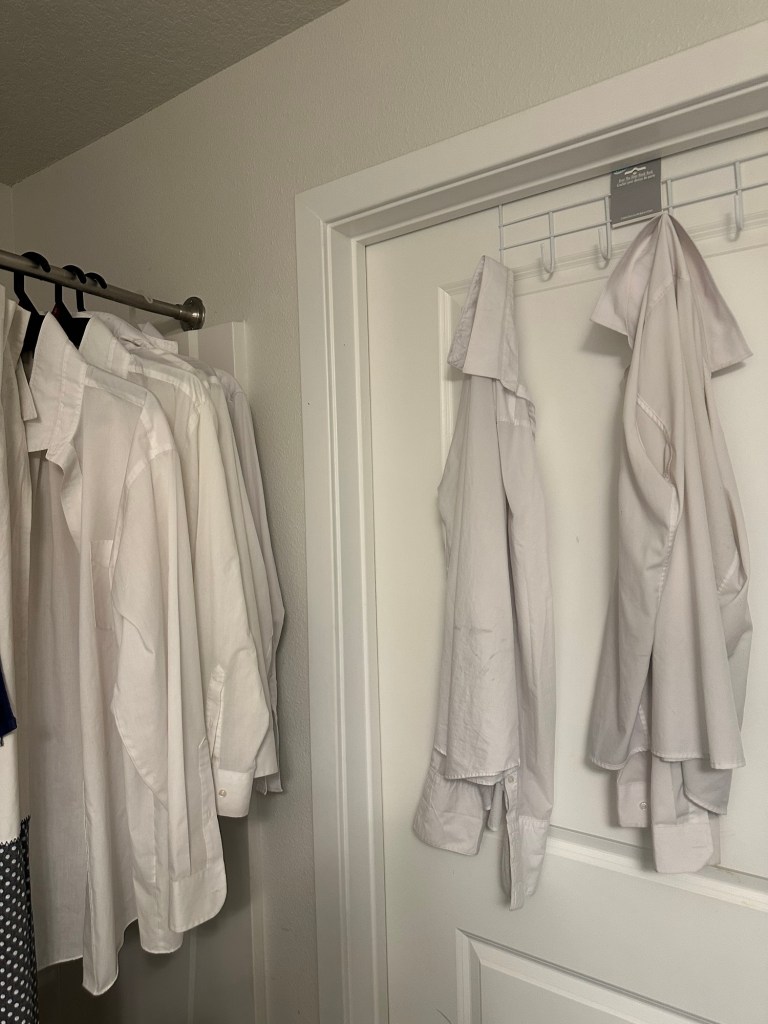
A few days ago my grandmother and I did my laundry together. I like to wear white dress shirts (they go with everything) and my grandmother usually washes my shirts while I’m at work, but I haven’t been working lately, so I’ve mostly been wearing a T-Shirt and jeans.
With all that being said, I start working again next week, so I figured it was time to get my shirts out of the hamper and into the closet.
(No more sweat and lipstick stains)
NAN NON BONDYE TOUPUISAN
This article is going to talk a bit more about the chores of the last article, and an income example similar to the article before that. The big things we are going to talk about is the importance of cleanliness (aka your clothes, home, and car) and the importance of planning your meals.
I had a call today with a Muslim brother of mine and we talked about different ways we can help the community, while he plugged me into some of the resources that were available to me. We talked about the current job market (specifically within the community), the importance of gigs and side hustles, and some of the most urgent needs of the community.
In general, the work available boiled down to the following categories:
- Auto Services
- Home Services
- Meal Prep & Delivery
- Moving & Hauling
- Cleaning
- Errands
- Outdoor
My goal, over the next few weeks is to become an expert in all of the above, in addition to the work I do as an Insurance Agent. It’s important to understand that while the work I do in Insurance is extremely important to me, so is the community; it’s a balancing act between God, my three families, myself, and my Muslim brothers and sisters.

While talking to a Muslim sister of mine, we talked about the way meals were handled in my household. As an adult, I’ve always cooked as I went along; I would cook 2-3 times a day depending upon whether or not I was planning to have a business meal for lunch or dinner. Growing up however, my mom would only cook once or twice a week, and then serve leftovers for the rest of the week. Honestly, I think my mom was on to something.
At first, cooking each meal was a necessity: I had to learn how to measure the macros of each meal, with the meal being “fresh” a bonus. Nowadays I have a significantly better understanding of macros, and I understand that for the most part, this is the best strategy:
- Cook a giant bowl of rice (for carbs)
- Cook a giant bowl of chicken (for protein)
- Cook a giant bowl of veggies (beans, broccoli, corn)
- Rotate carb option: potatoes, noodles, bread/toast
- Rotate protein option: beef, salmon, tuna, turkey
- Rotate veggies: cabbage, spinach, stir-fry, peppers, onions, asparagus, peas, carrots
- Add fruit: apples, bananas, oranges, blueberries, grapes, strawberries
- Add drinks: orange/cranberry juice, milk (with pp), sports drinks, seltzer, coffee, tea
- Experiment with sauce, gravy, and seasonings [teriyaki, bbq]
- Add breakfast/snack options: yogurt, eggs, protein bars, waffles/pancakes (with pp), grits, oatmeal (with pp),
- Focus on specific recipes and themes [halal, oriental, Caribbean, soul] — use cookbooks
- Always make enough to either have leftovers for multiple days, or otherwise enough to share with a person in need/a guest to your home
When it comes to the services needed, home and auto are the most complicated and for the most part I won’t really speak on, but the other ones, especially related to food, cleaning, moving & hauling, errands, and outdoors, will be the ones I’ll focus on.
NAN NON BONDYE TOUPUISAN
Over the past three weeks my partner and I have been exploring a transportation business while we work on launching our insurance agency. The results have been more educational than profitable, and I’d figure I’d share some of my previous results while motivating myself to both do more and better understand the transportation business.

Currently, we are doing deliveries during the day/night while we work on finding a rhythm. Personally I love this kind of work because you can set your own schedule: she drives during the day, I drive during the night. Our goal when driving is usually either 10 trips or $100 a day.
The problem with that, is that since we were new to the business, we haven’t been factoring in the expenses, nor have we been extremely disciplined in our accounting, which is normal considering we are only about 3 weeks into working this business together.
The average trip/delivery takes 30 minutes, is about 10 miles, and pays about $8 dollars, meaning 10 trips usually gets about $80, with 100 miles of driving in about 5 hours of driving (which becomes 6 hours once you factor in breaks/downtime)
The average cost for 100 miles is about $16, meaning it costs $16 to make $80, for an effective profit margin of $64 per 5 hour shift, which breaks down to about $12.8 per hour.
Here’s a more detailed breakdown:
- 10 trips = $80 for 100 miles in 5 hrs ($16 in gas)
- [$64 in profit]
- 20 trips = $160 for 200 miles in 10 hrs ($32 in gas)
- [$128 in profit]
- 30 trips = $240 for 300 miles in 15 hrs ($48 in gas)
- [$198 in profit] + bonuses
- 40 trips = $320 for 400 miles in 20 hrs ($64 in gas)
- [$256 in profit] + bonuses
- 50 trips = $400 for 500 miles in 25 hrs ($80 in gas)
- [$320 in profit] + bonuses
- 60 trips = $480 for 600 miles in 30 hrs ($96 in gas)
- [$384 in profit] + bonuses
- 70 trips = $560 for 700 miles in 35 hrs ($112 in gas)
- [$448 in profit] + bonuses
- 80 trips = $640 for 800 miles in 40 hrs ($128 in gas)
- [$512 in profit] + bonuses
The weekly bonuses get substantial at around 30 trips, and can be about $40-$120 depending upon the number of trips you do, meaning that planning your schedule makes a huge difference.
An extra $100 a week adds up to $5,200 a year, without any additional time spent driving, money spent or gas, or stress from the wear and tear on your vehicle.
In my experience, money spent on gas and the wear and tear on your vehicle are the biggest obstacles to these lines of work. It’s very easy to look at the dollar amount coming in and forget about everything else, but a wise man once told me this: it’s not what you make, but what you keep that determines your success.
A car needs routine maintenance every 5,000 to 7,500 miles, (typically every 6 months) with major service intervals hitting at 30,000, 60,000, and 90,000 miles. M
Modern cars last 200,000 miles on average, with some makers like Toyota or Honda usually going to around 250,000 with basic care, and others going up to about 300,000 with more specialized care.
If the car has a major issue (aka the engine blows up, the transmission goes bad) it’s typically time to get rid of it.
Driving 800 miles a week (aka full-time) means that you’ll be getting routine maintenance every 2 months and major service every 9 months.
Putting 42,000~ is excessive and means you’ll likely need a new car every 2-3 years, depending upon the year, make, model, and mileage of the vehicle when you buy it. If the mileage is 50,000 or less, then it’s easy to get 4-5 years out of it especially if it’s both the right car and the right driver.
In general, the average car is only driven 12,000 miles a year, meaning a new car should lasts about 20 years if cared for (it will likely be sold/traded before that), but used cars require a bit more nuance when being purchased.
A car with 120,000 miles realistically only has 80,000-100,000 miles left, which again, is only about 2 years of full time driving.
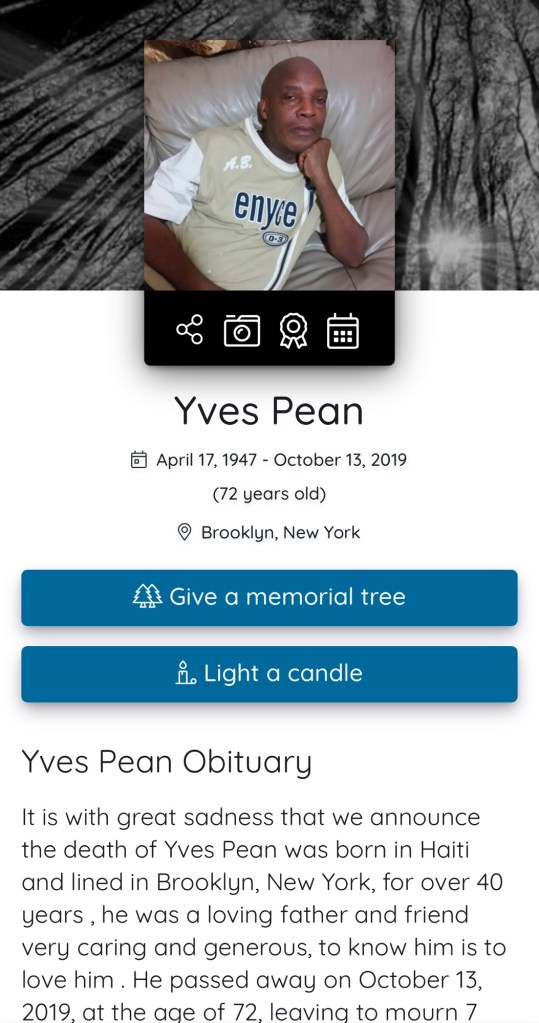
One of the reasons I’m so interested in the transportation/driving business is because of my grand-père. He came to the United States from Haiti in 1977, brought my mom here a few years later, and spent the rest of his life here. I’ve never actually met him face to face, which is a bit strange considering he lived and died in the city I was both born, but it is a big city.
I don’t know anything about him other than stories. From my understanding, he was a driving working for a black car service, driving around travelers and VIPs. I heard he was very kind, strong, and loved his family. His last few Facebook posts were things like him celebrating his kids and grandkids; little things like them getting married or being successful in school.
He is the cornerstone of my Haitian ancestry and my History of Blood:
Pour le Pays, pour les Ancêtres, Marchons unis, marchons unis—
NAN NON BONDYE TOUPUISAN
 🩸
🩸 
Leave a comment