Blood Money – Vol. 1, Chapter 1

The concept of blood money is money paid to the family of a murdered person, money paid to a hired killer, or money earned from someone’s death.
Historically, this was a term used for a reward paid to an informer for giving information that leads to a person’s arrest or execution. The most famous example of such is likely the story of Jesus Christ and Judas, as the Bible has been sold in the realm of 5 to 7 billion times (and is also available for free online).
The concept also includes fees given directly to a hired assassin or hitman for committing a murder. The movie House of Gucci immediately comes to mind, although I’m sure there are better examples. I just love the fashion and aesthetics of that film, and considering it made $153 million on a $75 million budget, the movie is objectively successful.
The concept also includes money gained ruthlessly at the cost of another person’s life, suffering, or death. We will be using this example somewhat frequently over the course of this blog.
The concept also includes money paid by a killer or their family to the relatives of a slain person to settle a crime or prevent revenge. This practice is known as diyah in Islamic law. This is where things get interesting and will be the primary focus on today’s article.
Under Islamic law (Sharia), blood money is known as Diyah (دية). It is a legal financial compensation paid to the victims or the heirs of a victim in cases of homicide, bodily injury, or property damage.
A life insurance payout is also financial compensation paid to the victim, or the beneficiary of the victim, in the case of homicide (provided the victim wasn’t involved in the crime) or in the case of bodily injury, depending on how severe the injury, and at some point we will explain accelerated death benefits in detail.
Qisas means “retaliation in kind” or an “eye for an eye” under Islamic criminal law. It is a legal principle allowing equal punishment for intentional murder or serious physical injury, applying strictly to the perpetrator of the crime, to ensure punishment does not fall on innocent family members or other groups.

The victim or the victim’s legal heirs hold the authority to demand qisas. Heirs can choose mercy over retribution. They can accept diyah (or blood money) or grant a full pardon.
There is a similar concept in the Torah, and Qisas has been called a “refinement” of practices described in the mitzvah (Jewish laws) and other Pre-Islamic Arab sources. In older societies, this was the way of dealing with personal crimes.
Long before the Quran, inter-tribal conflicts were resolved by a member of the offending tribe being handed over to the victim’s family for qisas retaliation (killing or maiming) — the handed-over person being equivalent in gender and social status to the victim of the offense. If one family killed a daughter then the other family gave a daughter, and so on and so forth.
The primary goal of Diyah is to provide justice for the victim’s family, offer a peaceful alternative to retaliation, and act as a financial deterrent.
Diyah applies differently depending on the nature of the act:
- In cases of accidental death (such as a car accident), Diyah is the standard legal remedy. It is mandatory unless the victim’s family waives it out of charity.
- In deliberate murder cases, the primary sentence is Qisas (equal retaliation/capital punishment). However, the victim’s family holds the ultimate right to forgive the offender. They can choose to waive Qisas in exchange for Diyah, or forgive the perpetrator entirely for no financial compensation.
Traditionally, classical Islamic jurisprudence established the baseline value for Diyah based on resources available during the early Islamic era:
100 camels (the standard baseline)
Alternatively, its equivalent value in gold (1,000 dinars) or silver (10,000 dirhams)
In modern times, individual countries that practice Sharia—such as Saudi Arabia, the UAE, Iran, and Pakistan—statutorily fix the exact currency value of Diyah. This amount is periodically reviewed and updated by their respective judicial councils or ministries of justice to match inflation and modern economic realities.
The full amount of diya (blood money) in Iran for the Iranian year 1404 (March 2025 to March 2026) is 16 billion Iranian rials in non-haram months.
That is roughly $11,639.75 in USD as of September 2026
In Saudi Arabia, the official standard diya (blood money) amount is 400,000 SAR for intentional or murder cases and 300,000 SAR for manslaughter or semi-intentional killings, though families often negotiate much higher private compensation. That is $106,586.20 and $79,939.65 in USD respectively.

The standard amount in the UAE is AED 200,000 for cases like accidental death or manslaughter, but a judge can raise or lower this amount based on the facts of the case. That is $54,458.82 in USD, more than Iran but less than Saudi Arabia
The minimum value of Diyat (blood money) in Pakistan is Rs. 19,352,390 (approximately 19.35 million Pakistani Rupees) for the fiscal year 2026–27. That translates to $69,779.95 in USD, more than the UAE but less than Saudi Arabia.
Out of the four places we reviewed, the average standard amount of blood money is $60,615.
In cases of intentional murder where Diyah is accepted, the perpetrator is personally liable. In cases of accidental death, traditional Islamic law utilizes the concept of the Aqilah—a cooperative community, tribe, or extended family network that shares the financial burden of the payment to prevent the individual from being ruined by an accident. In modern contexts, this often functions similarly to compulsory liability insurance.
Liability insurance is legally required to drive a motor vehicle in Florida, but we will discuss more on that later.
Diyah is not limited to death. Sharia outlines specific, fractional percentages of the full Diyah amount for non-fatal, bodily injuries (often referred to as Arsh). For example, the loss of an eye, a limb, or specific bodily functions carries a fixed fraction of the total Diyah value, ensuring standard compensation for permanent disabilities.
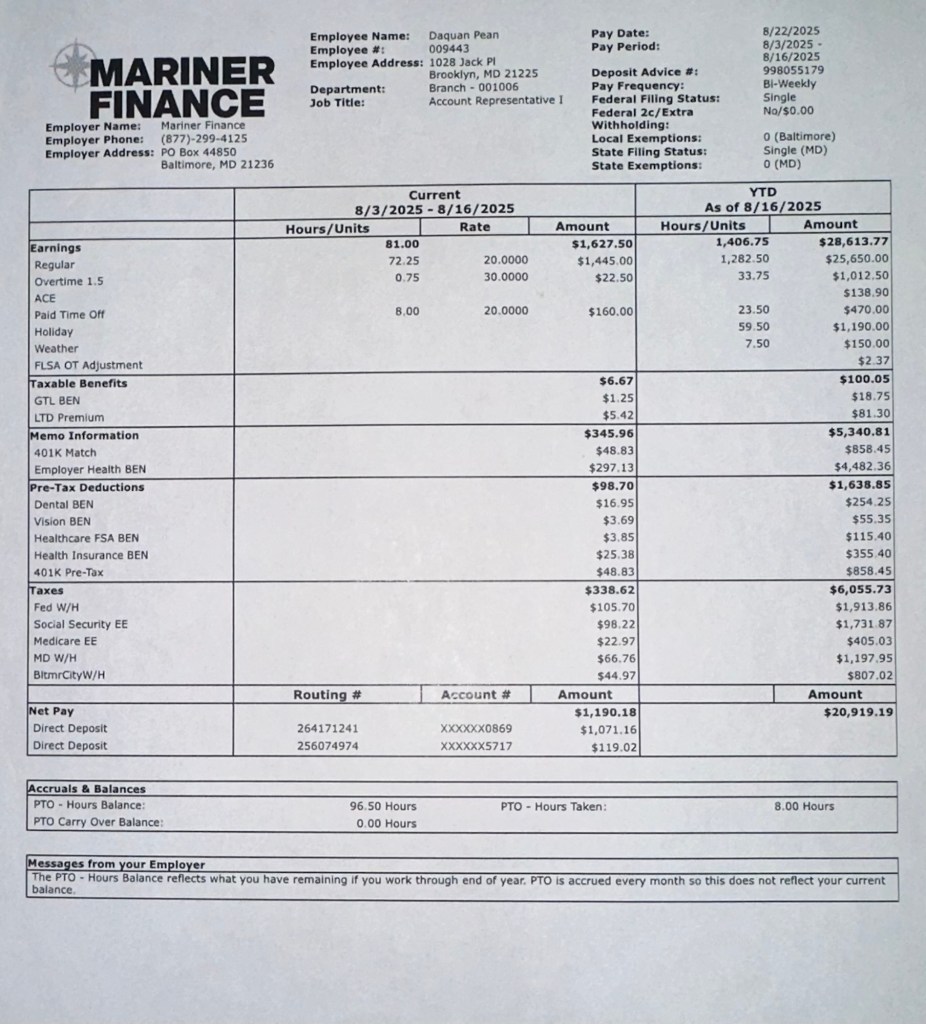
Fun fact: in my first year as an Insurance Agent, I mostly sold AD&D (accidental death & dismember) insurance policies. I sold them attached to the loans I wrote, provided the customer qualified. At that time I got paid a salary and I didn’t receive commission on those policies, so I didn’t think to keep track of my performance.

After a lot of prayer and meditation, I’ve decided to continue my career as an Insurance Agent. I won’t be using the title of Insurance Agent but I plan on sticking around the business long term. If anyone asks me I’ll simply refer to the company I work for: ASB Financial.
I’m still a new agent so my main focus is launching my business, and I’ll be using this blog to document my activities while also educating my audience.
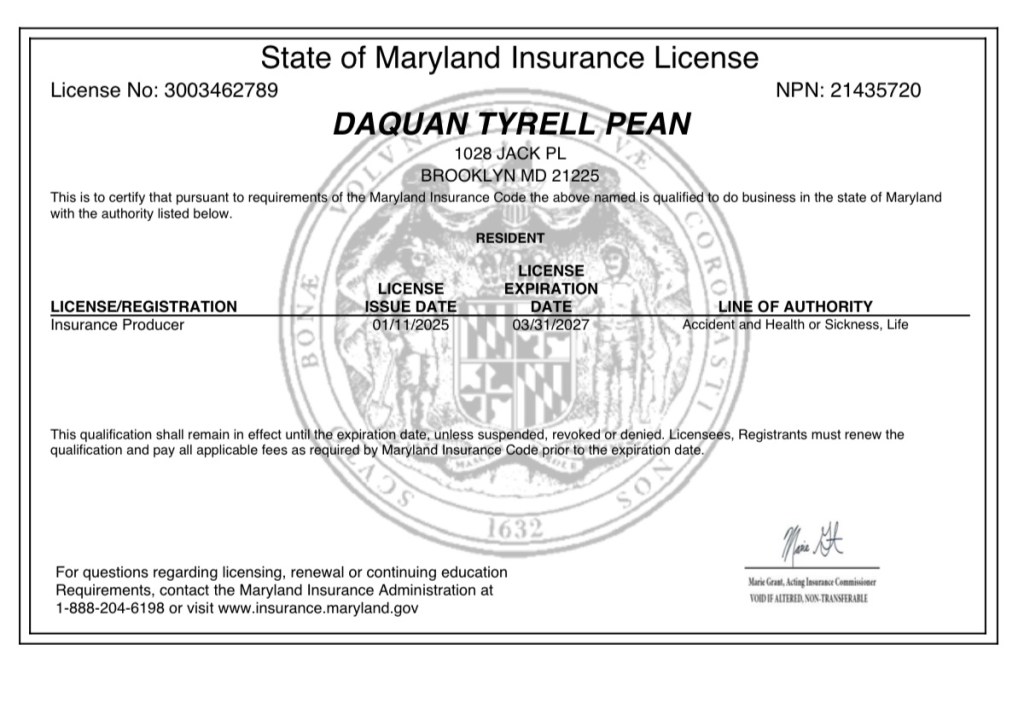
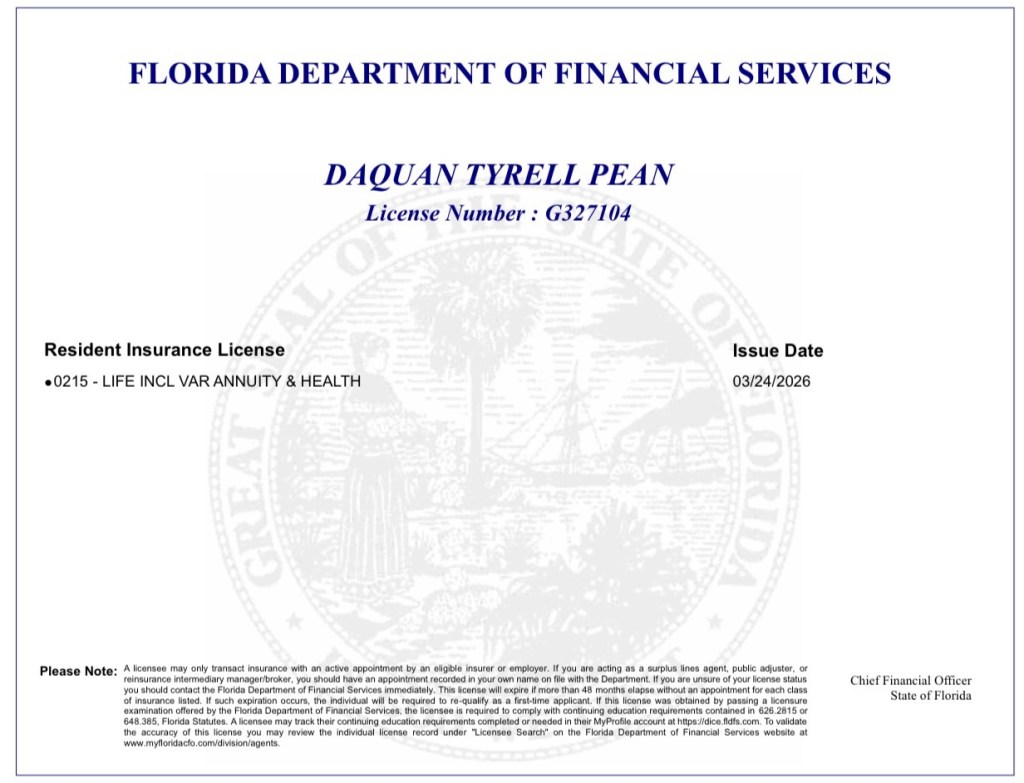
Life insurance is widely considered haram in Islam. Despite being aware of that, I will still continue to sell it. The reason being is very simple: I am qualified in the field of insurance. I know right and wrong and trust my judgement. I am not asking anyone’s opinion on my chosen profession, it is what it is. Just because a person is an expert in Islam doesn’t mean they are an expert in the field of insurance. The same way scholars have their degrees and credentials and all those things, I have my licenses and the money I’ve made in the business, sometimes at the cost of someone’s suffering.
 🩸
🩸 
Leave a comment