Quran Study – Vol. 1, Chapter 2
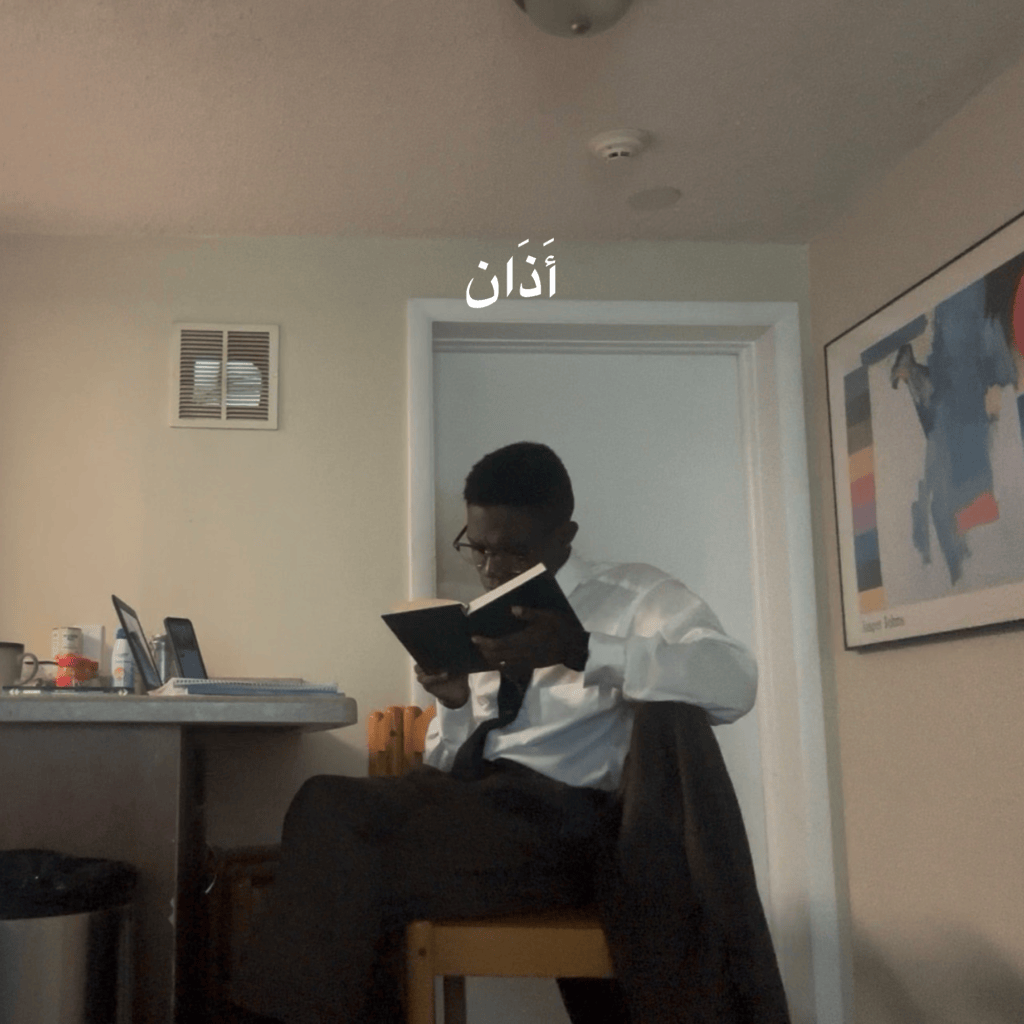
Bondye pa ka pèdi.
Last week we introduced “Quran Study” through a messy article inspired by a recitation that I attended at the mosque. This week we will try to clean up our thoughts a bit and focus on an aspect of Salat that always makes me emotional: the Adhan.
The Adhan (Arabic: أَذَان), also spelled Azān, is the Islamic call to prayer, recited to announce the beginning of the time for the obligatory daily prayers. It is typically performed by a Muezzin from a mosque’s minaret, although it may be recited elsewhere.
The adhan is recited five times a day, corresponding to the five obligatory prayers: Fajr, Dhuhr, Asr, Maghrib, and Isha. The adhan has historically been one of the most recognizable features of Muslim religious life and is commonly heard from mosques around the world.
Here is the Physical Etiquette of performing the Adhan, according to the Sunnah:
- Face the Qiblah: Stand facing Mecca.
- Finger Position: Put your index fingers lightly in your ears to help project your voice.
- Turning the Head: Turn your face to the right when saying “Hayya ‘alas-Salah” and to the left when saying “Hayya ‘alal-falah” (keeping your body facing forward)
Usually there’s someone performing the Adhan in the prayer hall but it came to me that I should strive to do it as well, and I think with enough effort, I should be able to perform the Adhan well enough to ideally move another person to both prayer and tears
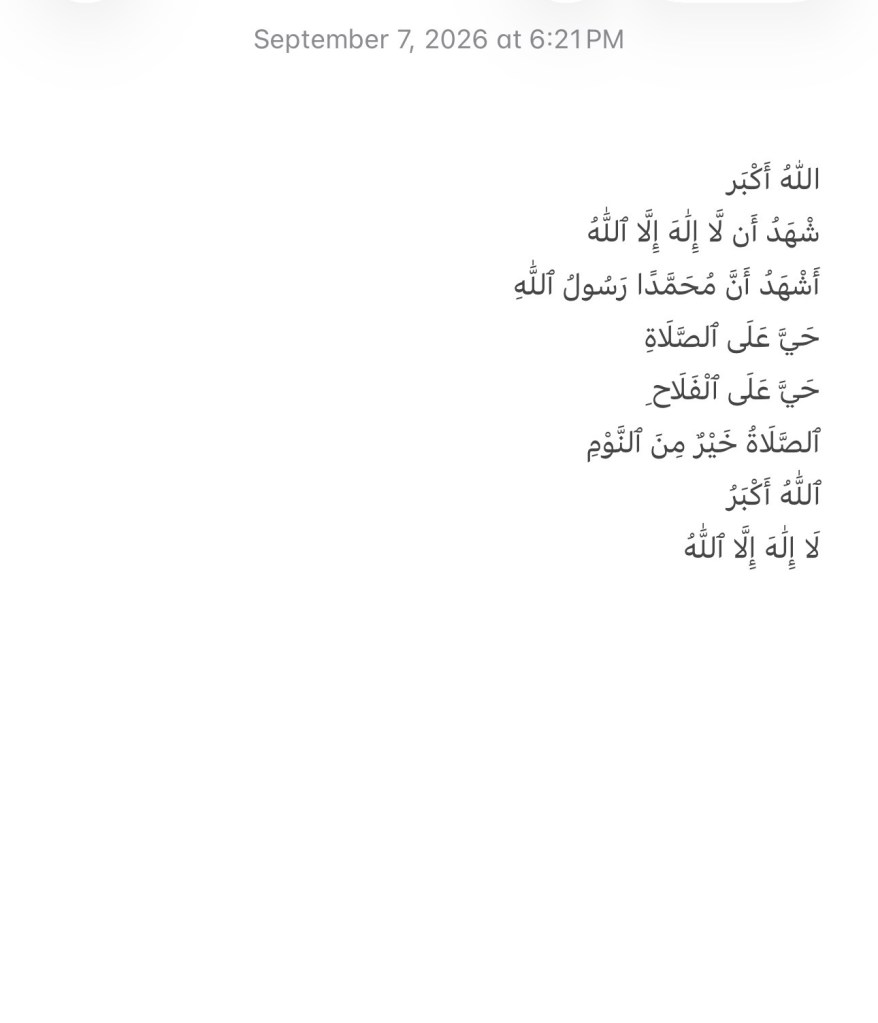
Personally I think studying Arabic in Arabic, and while I think the romanization is helpful for pronunciation, it generally does more harm than good, but I’m a little too lazy to create a functioning table (and image) at the moment, so we will make the creation of such the focus of next weeks article.
The Words of the Adhan
Recite the phrases in this exact order:
- Allahu Akbar — Allah is the Greatest (Recited 4 times)
- Ash-hadu an la ilaha ill-Allah — I bear witness that none is worthy of worship except Allah (Recited 2 times)
- Ash-hadu anna Muhammad-ar-Rasoolullah — I bear witness that Muhammad is the Messenger of Allah (Recited 2 times)
- Hayya ‘alas-Salah — Come to prayer (Recited 2 times, turn face right)
- Hayya ‘alal-falah — Come to success (Recited 2 times, turn face left)
- As-salatu khairum minan-naum — Prayer is better than sleep (Recited 2 times — Only added for the Fajr/dawn prayer)
- Allahu Akbar — Allah is the Greatest (Recited 2 times, face back to the front)
- La ilaha ill-Allah — There is no deity except Allah (Recited 1 time) [1]
One thing I’ve learned about myself from studying Foreign Languages is that there is very specific way I prefer to learn. I have to actually read, write, speak, and type, first in a sweet and melodic voice, then using poetry or prose, and then, conversationally, focusing on reactions and audacious questions. The idea is to become less and less serious.
My goal for this week is simply to study the Adhan, Al-Fatiha, the Fajr prayer, and the Arabic alphabet. Regarding the Adhan, Al-Fatiha, and Fajr, I also plan on studying them in Haitian Creole.
Eventually I’ll probably publish my studies into a book but it’s too early to conceptualize. I will look into hosting an online Quran Study (with a non-AI flyer) while also getting involved in the Muslim Students Association, finishing my FASFA, and generally taking my goal of becoming a CPA somewhat seriously, in addition to setting up the newsletter for the website. So many things to do, and I’m thankfully I have the time to do them.
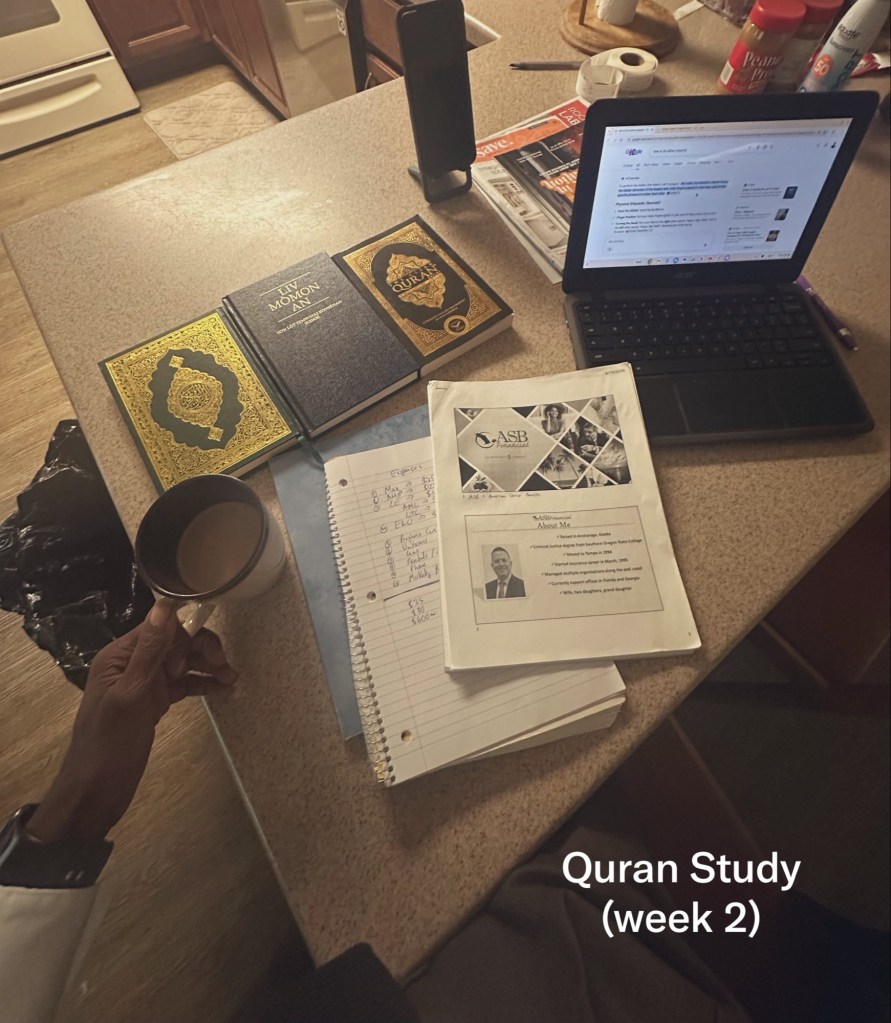
One thing I just realized is that the Adhan actually includes the Shahada, so by studying it I can kill two birds with one stone.
I almost forgot that I did actually start a New Muslims course and I’m going to consolidate my notes for that course into here as well. One things it talks about is the Hadith, and there is a specific one I want to talk about before I close this article.
Archery holds a high and praised status in Islamic tradition, with the Prophet Muhammad (PBUH) strongly encouraging Muslims to learn and practice it.
The Prophet Muhammad (PBUH) was born in the year 570 in the city of Mecca, Saudi Arabia.
He stated from the pulpit that physical strength and preparation against adversaries is tied directly to archery, repeating the phrase “strength is in archery” three times.
He noted that all idle pastimes are vain except for three activities: shooting a bow and arrow, training a horse, and playing with one’s spouse.
A well-known narration states that Allah admits three people into Paradise for a single arrow: the person who makes it with good intent, the person who shoots it, and the person who hands it over.
The Prophet (PBUH) also emphasized dedication, stating that anyone who learns archery and then abandons or neglects it has turned away from a valuable blessing or committed an act of disobedience.
Historical accounts and traditional collections note that the he owned multiple bows (such as one named Al-Ra’udha or Al-Bayda’), and some surviving relics associated with early Islamic archery are preserved today in places like the Topkapi Palace Museum in Turkey.
Firearms largely replaced the bow and arrow in Western European warfare during the 16th and 17th centuries, with bows completely disappearing from European battlefields by about 1650.
Early handguns like the arquebus first appeared on battlefields and were used alongside traditional archers. Muskets and handguns became popular because armies could train new recruits much faster. Organized military archery ended in Western Europe, with the Battle of Tippermuir in 1644 standing as one of the last major conflicts with significant bow usage.
The reason for the shift is simple, and largely practical: soldiers learned to fire a gun in a short time, while mastering a longbow required years of practice. Heavy musket balls easily punched through steel plate armor that deflected traditional arrows. Manufacturing lead bullets and black powder en masse proved cheaper and easier to transport than crafting specialized wooden arrows.
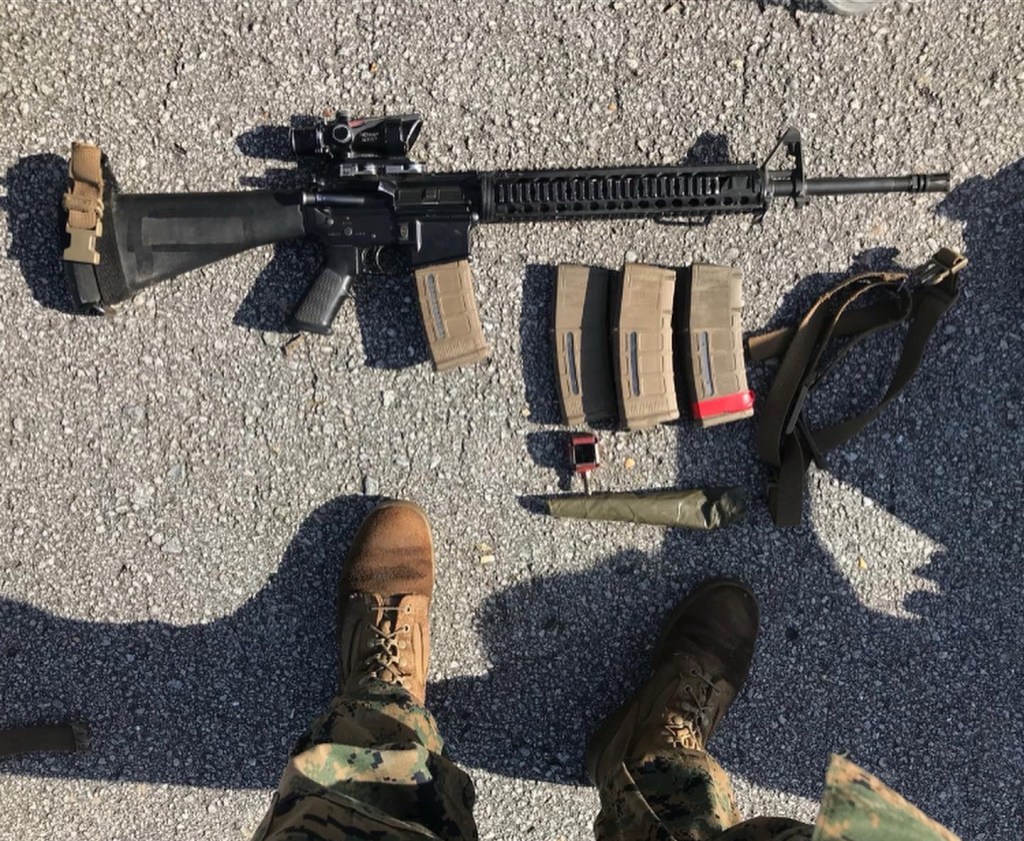
There is an entire millennium between the life of the Prophet (PBUH) and the advent of firearms. We can realistically assume that if he was born to, he would likely treat the rifle and cartridge with the same reverence that he treated the bow and arrow.
Cars mostly replaced horses in the United States and major cities between 1910 and 1930. We will apply the same logic to the horse that we will the bow and arrow.
The only thing that hasn’t changed is the importance of playing with one’s spouse.
 🩸
🩸 
Leave a comment