Blood Money – Chapter 1

Most of my working career (so far) has been in marketing. I’ve spent about 4 years in the field, making $118,035 during that time for an average of $29,508.75 per year.
I spent 2 of those 4 years on residential aka door-to-door campaigns, selling fixed rate energy supply contracts, during which made a total of $75,731 or $37,865 per year, which is significantly more than what I make on average. The other two years were spent experimenting with retail and event campaigns, business to business campaigns, and selling other products such as online banking platforms and telecommunications services. I would make less money but get to travel more, working with different clients in different markets, proving to myself that I could “sell anything anywhere”, and generally making experiences that I will never forget.
Outside of marketing, I spent 2 years in accounting/finance, 2 years in sales/customer service, and the 16 months I spent in the Marines, for a total of 5 years outside of marketing, and 9 years overall. I’ve made $261,411 over the course of my career.
I made $29,656 in 2025 which is a little above average for what I make per year, but I’ll probably make less than $15,960 this year, meaning I’ll fall well below the poverty level for an individual. This is the only time I’ve fallen below this level since the start of my career, notwithstanding the year of the COVID19 pandemic.
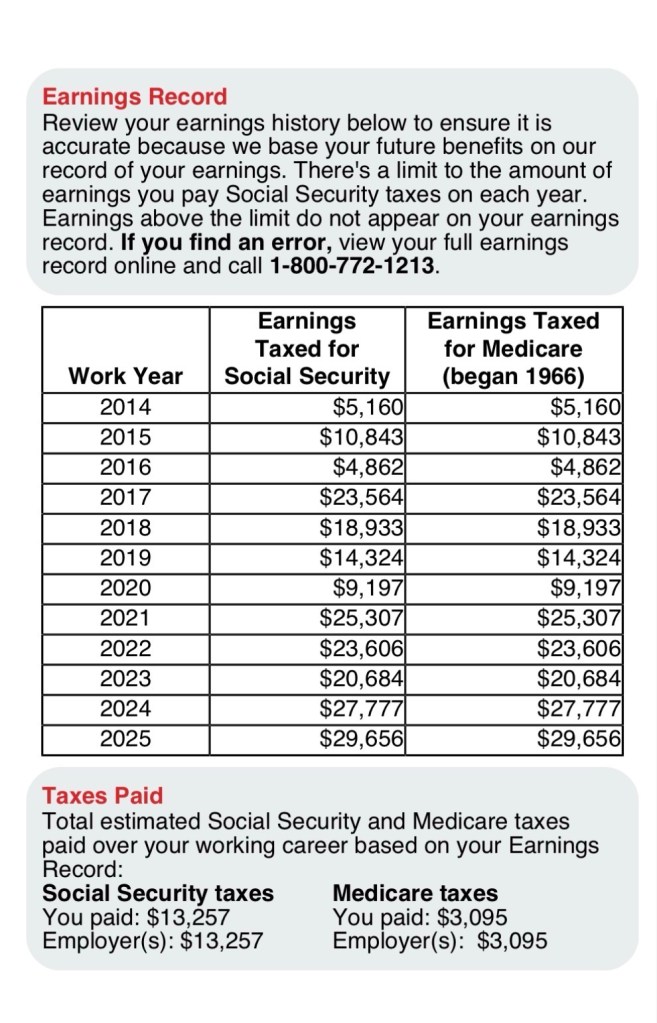
It’s worth noting that my earning record according to the Social Security Administration is different from my earning record according to the Internal Revenue Service simply because I’ve worked as an independent contractor for a few years and I usually didn’t pay into social security. Frankly, I just didn’t understand how money worked, which was one of the reasons I got into financial services, and one of the reasons I eventually became an insurance agent.
The FMO that I’m working with now will likely not pay taxes, so I’ll have to learn how to run payroll and do more of the business finances that I’ve been avoiding. I am tired of working hard to make money but never having any money at the end of the day. It’s important that as I build a business this time, that my lifestyle does not scale too quickly, first my savings can increase (in case of emergency.
This year I haven’t really made any money. Instead, I’ve focused on my recovery, which in turn has then allowed me to focus on my religion, while working on disability claims and a name change. I have a short legal process to change my name back to Daquan Tyrell Pean. It seems strange to have to spend time and money changing my name to the name I was born with, but that’s just what I have to do at this time. My current name feels too much like a slave name. So changing my name back to my name does two things: it affirms both my Muslim identity and my Haitian ancestry, which are two of the overarching goals of A History of Blood, and Blood Money by extension.
Because of my poor state, I plan on applying for disability, which was actually something someone had asked me about.
When it comes to disability, it’s important to understand what it is.
A disability can occur at any age. If you become unable to work at a certain earnings level due to a mental or physical disability, and you meet certain eligibility requirements, you and your family may be able to receive Social Security disability benefits.
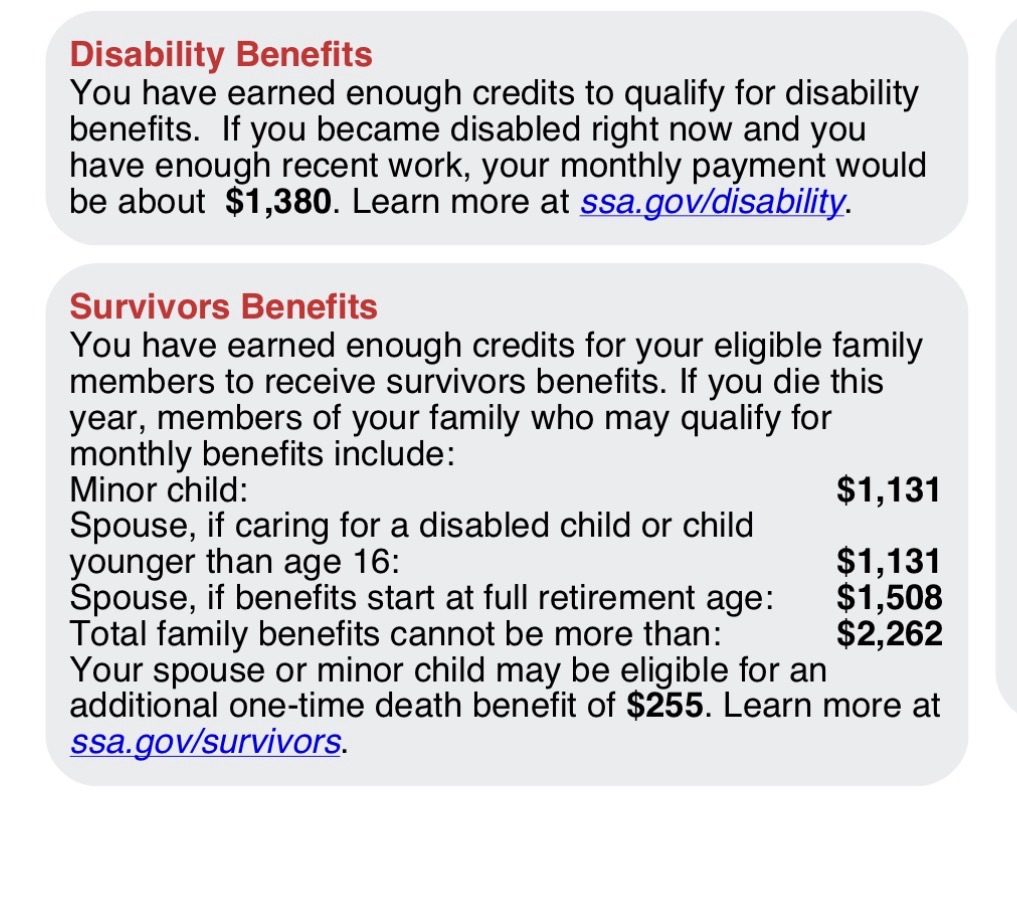
At my best, I made $37,865 per year. On average, I make about $24,000~ a year, and I have more than enough work credits to qualify for SSDI, and I could possibly qualify for VA disability as well. Here is an example:
1. SSDI: $1,380/month
If SSA approves the veteran for SSDI at the estimated $1,380/month, that’s approximately:
$1,380 × 12 = $16,560/year
The 40+ work credits establish an important part of SSDI eligibility, but SSA also requires a qualifying disability that prevents substantial gainful activity (SGA) and is expected to last at least 12 months or result in death.
A person who is earning more than a certain monthly amount (net of impairment-related work expenses) is ordinarily considered to be engaging in SGA. The amount of monthly earnings considered as SGA depends on the nature of a person’s disability.
After a person becomes eligible for Social Security disability benefits, the person may attempt to return to the work force. As an incentive, we provide a trial work period in which a beneficiary may have earnings and still collect benefits. The trial work period does not apply to SSI benefits. The monthly amount of earnings that trigger a trial work period are lower than the monthly SGA amounts shown below.
In 2026, the SGA level for a non-blind individual is $1,690/month.
There is generally also a five-month waiting period before SSDI cash benefits begin.
2. VA disability would be separate
The veteran could potentially receive VA disability compensation in addition to the $1,380 SSDI.
VA compensation is a separate program. The veteran generally needs a condition that was incurred or aggravated during active service, and the VA assigns a disability rating. VA disability compensation is tax-free.
For example, if the veteran eventually received:
- SSDI: $1,380/month
- VA compensation: $500/month
the combined gross monthly income would be approximately:
$1,880/month
or:
$22,560/year
If VA compensation were $1,000/month:
$1,380 + $1,000 = $2,380/month
$28,560/year
Those are illustrations rather than predictions of the veteran’s VA rating or payment.
3. The General discharge is significant
A General discharge under honorable conditions is generally considered an acceptable character of service for VA benefits. VA states that, generally, Veterans with honorable or general discharges can receive VA benefits and services.
So a General discharge isn’t the same thing as a dishonorable discharge for VA purposes.
However, the 16 months of service is important for VA healthcare eligibility.
For someone who enlisted after September 7, 1980, VA generally requires 24 continuous months of active duty or the full period for which the person was called to active duty, unless an exception applies. Exceptions include certain early-outs, hardship discharges, or discharge for a service-connected disability.
So with only 16 months, I’d want to know why he was discharged and what his DD-214 says about his service and separation before concluding that he qualifies for VA healthcare.

That does not necessarily prevent him from receiving VA disability compensation. The compensation rules focus on having a qualifying service-connected disability and acceptable character of discharge.
4. Medicare through SSDI
If SSDI is approved, Medicare generally becomes available after the applicable disability entitlement waiting period.
This becomes particularly useful because Medicare and VA healthcare can coexist. VA specifically says Veterans can use VA healthcare alongside Medicare.
They work differently:
VA healthcare
- Primarily used through VA facilities or VA-authorized community care.
- VA can provide care for service-connected and, depending on eligibility/priority group, other conditions.
- Copays can depend on priority group and the nature of care.
Medicare
- Can be used with Medicare-participating doctors and hospitals outside the VA system.
- Gives the veteran another healthcare network.
- Medicare and VA generally don’t simply pay the same bill together; the veteran chooses which coverage to use for particular care.
So, if the veteran eventually has both VA healthcare + Medicare, that can provide two distinct avenues for medical care.
5. What happens if he wants to work?
This is where SSDI requires careful planning.
Receiving SSDI doesn’t mean the veteran can never work again.
SSA has a Trial Work Period (TWP). In 2026, a month in which SSDI earnings exceed $1,210 counts toward the nine-month trial-work-period threshold. The nine months don’t have to be consecutive and occur within a rolling 60-month period. During the TWP, the person can generally receive their full SSDI benefit while testing their ability to work, provided they continue to have a qualifying disability and report the work.
After the TWP comes a 36-month Extended Period of Eligibility. In 2026, the non-blind SGA level is $1,690/month. During that period, benefits can generally be paid in months when earnings remain below SGA.
And importantly, Medicare can continue for a substantial period even when SSDI cash benefits stop because of work. SSA describes continuation of Medicare for at least 93 months after the nine-month TWP in applicable circumstances.
6. VA disability and working are different
VA disability compensation does not automatically require the veteran to be unable to work.
For example, someone could have a VA service-connected disability rating and continue working.
There is also a separate VA benefit called Individual Unemployability (IU/TDIU) for Veterans whose service-connected disabilities prevent substantially gainful employment.
So it’s important to distinguish:
VA disability rating ≠ automatically unable to work
SSDI approval = SSA has determined the disability meets its inability-to-work standard
That’s why someone can sometimes have VA disability compensation while working, whereas SSDI involves substantially greater restrictions regarding work activity.
The VA payment is generally tax-free, while SSDI can have different federal tax consequences depending on total income and filing circumstances.
One issue I would investigate first
Because he served only 16 months, I would specifically examine his DD-214 before assuming he qualifies for VA healthcare.
The most important pieces would be:
- Dates of entry and separation
- Character of service — General under honorable conditions
- Narrative reason for separation
- Separation code
- Whether he was discharged because of a disability
- Whether he served in a qualifying combat theater/exposure circumstance
- Any medical conditions documented during those 16 months



Leave a comment