Blood Money – The Third Pillar

Surah At-Talaq (65:1) states: “O Prophet! If any of you divorce women, divorce them during their period of purity, and calculate their term. And be pious before God, your Lord. And do not evict them from their homes, nor shall they leave, unless they have committed a proven adultery. These are the limits of God—whoever oversteps God’s limits has wronged his own soul. You never know; God may afterwards bring about a new situation.”
An Islamic marriage is called a nikāḥ (نكاح). At its core, it is a religiously recognized marriage contract between a man and woman, entered into voluntarily and with defined rights and responsibilities. The exact procedure varies somewhat among Islamic schools and cultures, but the basic structure is fairly consistent.
1. Both people agree to marry
Islamic marriage begins with mutual consent.
Neither person should be forced into the marriage. The prospective spouses should have the opportunity to know important information about each other and agree to the marriage.
The Qur’an describes marriage as a relationship involving tranquility, affection, and mercy:
“And He placed between you affection and mercy.”
— Qur’an 30:21
Before the nikāḥ, couples commonly discuss:
- Religion and religious practice
- Where they will live
- Finances
- Children
- Employment
- Expectations regarding household responsibilities
- Relationship with extended family
- Previous marriages
- Long-term goals
- Any significant obligations or circumstances
This is essentially the courtship/decision-making stage before the actual marriage contract.
2. The couple becomes formally engaged
An engagement (khiṭbah) is not the marriage itself.
The couple can agree that they intend to marry, but they are still considered non-maḥram to one another until the nikāḥ takes place.
That means an engagement does not itself make physical intimacy or private marital relations permissible.
An engagement can be ended without requiring a divorce because there is not yet a marriage.
3. The wali becomes involved
In the traditional Sunni understanding, the bride’s walī (ولي)—usually her father, or another qualified male guardian if her father is unavailable—plays an important role in the marriage contract.
The wali’s role is to protect the bride’s interests and participate in the marriage agreement.
There are differences among Islamic schools regarding exactly how the wali functions. For example, the Hanafi school gives an adult woman greater independent authority to contract her own marriage than the other major Sunni schools.
So the exact wali requirements should be determined according to the Islamic authority/community conducting the nikāḥ.
4. The mahr is established
One of the most important parts of an Islamic marriage is the mahr (مهر).
The mahr is a gift or financial entitlement given by the husband to the wife as part of the marriage.
It belongs to the wife, not her parents.
It can be:
- Cash
- Gold
- Jewelry
- Property
- Another permissible asset
- A specified service or benefit in circumstances recognized by Islamic law
The Qur’an says:
“And give the women their bridal gifts graciously.”
— Qur’an 4:4
The couple should agree on the amount and terms before the nikāḥ.
Immediate vs. deferred mahr
The mahr can be structured as:
Muʿajjal — immediate
Paid at or before the marriage.
Mu’akhkhar — deferred
Paid later, often upon divorce or death, according to the agreed terms.
It can also be divided between immediate and deferred portions.
For example:
Mahr: $5,000
$2,000 paid at marriage
$3,000 deferred
The deferred portion is a debt owed to the wife, subject to the terms of the agreement.
5. Witnesses are present
A traditional Sunni nikāḥ normally involves witnesses.
The exact requirements differ among schools, but commonly the marriage is witnessed by two qualified witnesses.
Their purpose is to establish that the marriage contract actually occurred.
6. The ijāb and qabūl take place
This is the actual contractual exchange.
The two terms are:
- Ijāb (إيجاب) — offer/proposal
- Qabūl (قبول) — acceptance
For example, the wali or authorized representative might say:
“I marry you to my daughter [name] for the agreed mahr of $5,000.”
The groom responds:
“I accept her in marriage for the agreed mahr.”
The wording doesn’t have to be exactly this, but the essential point is that there is a clear offer and acceptance.
Once the requirements are satisfied, the nikāḥ has been contracted.
7. The nikāḥ ceremony takes place
The ceremony can be extremely simple.
An imam or other knowledgeable person may:
- Welcome everyone
- Recite Qur’an
- Give a khuṭbat al-nikāḥ (marriage sermon)
- Explain the responsibilities of marriage
- Confirm the consent of the parties
- Confirm the mahr
- Conduct the ijāb and qabūl
- Confirm the witnesses
- Make duʿā for the couple
There is no requirement that the ceremony be extravagant.
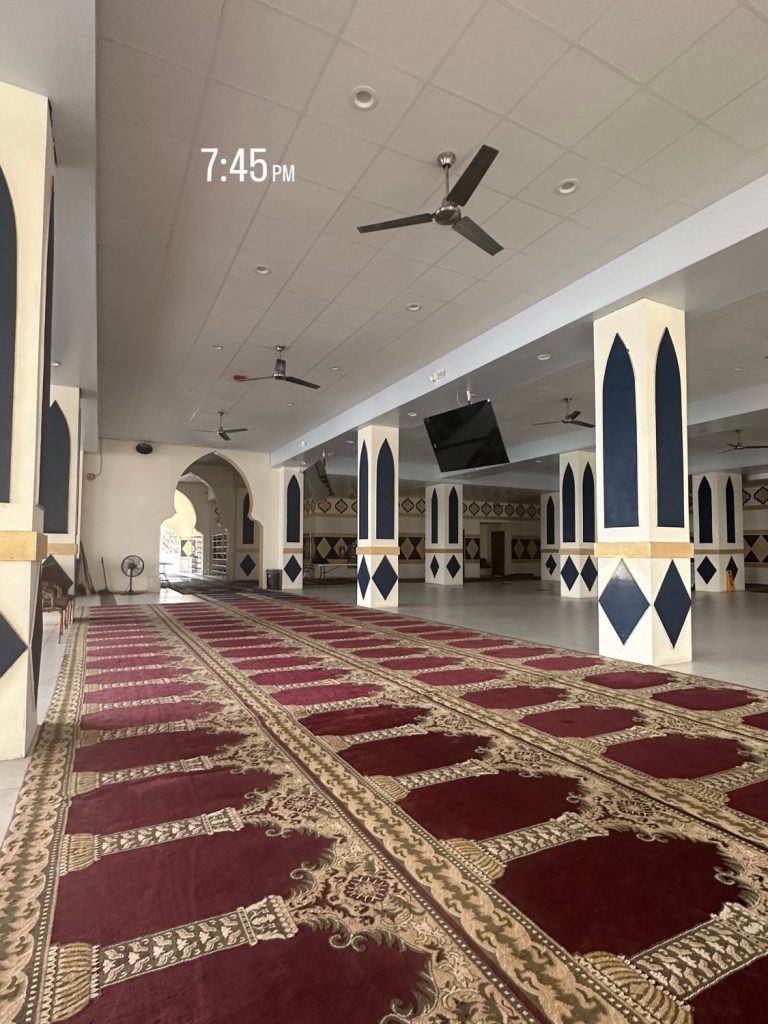
A nikāḥ can take place in:
- A mosque
- A home
- An Islamic center
- A community hall
- Another appropriate location
8. The marriage is publicly announced
Islam places importance on distinguishing a legitimate marriage from a secret relationship.
The marriage is therefore normally announced or made known to the community.
This is where the walīmah becomes important.
Walīmah
The walīmah is the wedding meal or reception.
It can be large or very simple.
The Prophet Muhammad ﷺ encouraged the walīmah, including in the well-known hadith:
“Give a walīmah, even if only with one sheep.”
The essential principle isn’t extravagance. It is celebrating and publicizing the marriage.
9. The couple begins married life
After the valid nikāḥ, the two are husband and wife according to Islamic law.
Their relationship changes fundamentally.
They now have rights and responsibilities toward one another involving:
Husband
Traditionally includes responsibilities such as:
- Financial maintenance (nafaqah)
- Housing
- Food and necessities
- Protection and reasonable support
- Fulfilling marital obligations
Wife
Includes rights such as:
- Mahr
- Financial maintenance from the husband
- Respect and good treatment
- Her own property and financial independence
- Marital rights
Both spouses
Both are expected to:
- Treat one another with kindness
- Maintain fidelity
- Protect one another’s privacy
- Cooperate in the household
- Raise children responsibly
- Consult one another
- Avoid ظلم (ẓulm, wrongdoing/oppression)
The Qur’an describes spouses as:
“They are clothing for you and you are clothing for them.”
— Qur’an 2:187
That is a powerful description of marriage: protection, intimacy, dignity, and mutual covering of one another’s weaknesses.
10. The marriage should also be legally recognized
For a couple living in the United States, there are actually two separate questions:
Islamic marriage
The nikāḥ establishes the religious marriage according to the applicable Islamic requirements.
Civil marriage
The couple should also obtain the appropriate marriage license and civil marriage recognition under state law.
These are not necessarily the same thing.
A couple can have a religious ceremony without satisfying all civil requirements, which can create serious legal problems involving:
- Taxes
- Property
- Medical decision-making
- Inheritance
- Immigration
- Divorce
- Insurance
- Retirement benefits
- Children
So an American Muslim couple should generally make sure that their marriage is both Islamically valid and legally recognized.
A simple example
Imagine a Muslim man and woman decide to marry.
Before marriage
They meet appropriately, discuss their expectations, and decide they want to marry.
Engagement
They announce their intention to marry and establish a wedding date.
Mahr
They agree:
Mahr: $10,000
- $5,000 immediately
- $5,000 deferred
Nikāḥ
The bride’s wali participates.
Two qualified witnesses are present.
The marriage offer is made:
“I marry you to [bride’s name] for the agreed mahr.”
The groom says:
“I accept.”
The imam makes duʿā and the marriage is announced.
Walīmah
The families and community celebrate with a meal.
Civil marriage
The couple completes the applicable state marriage requirements.
They are now husband and wife both religiously and civilly, assuming all applicable requirements have been satisfied.
The whole process in one line
Insurance License -> Driver’s License -> Class D License -> Class G License -> Marriage License -> Islamic Marriage

Marriage is considered half of one’s deen (religion) in Islam because it protects a person from major temptations and helps guard chastity.
The phrase comes from a statement reported by Anas ibn Malik, where the Prophet Muhammad said that a person who marries has fulfilled half of their religion. Scholars like Al-Albani have graded this narration as sound. Scholars explain that a large portion of human moral struggle involves desires and modesty. Marriage provides a lawful (halal) way to fulfill these needs, which protects a major part of a person’s religious integrity.
The second part of the teaching instructs the believer to fear God regarding the remaining half. This refers to daily personal discipline, honesty, character, and control over other aspects like one’s tongue and general actions.
Living with a spouse requires patience, compromise, and responsibility.
Daily life and providing for a family become acts of worship when done for the sake of Allah.
Unmarried individuals do not literally lack half of their faith or standing before God if they are unable to find a spouse; it is a profound spiritual aid rather than a strict prerequisite for spiritual wholeness.
سأطلب الله
ان اراك مرتين
مره هنا
ومره في الجنة
جيليان


Leave a comment