A History of Blood – Foreword to the First Edition
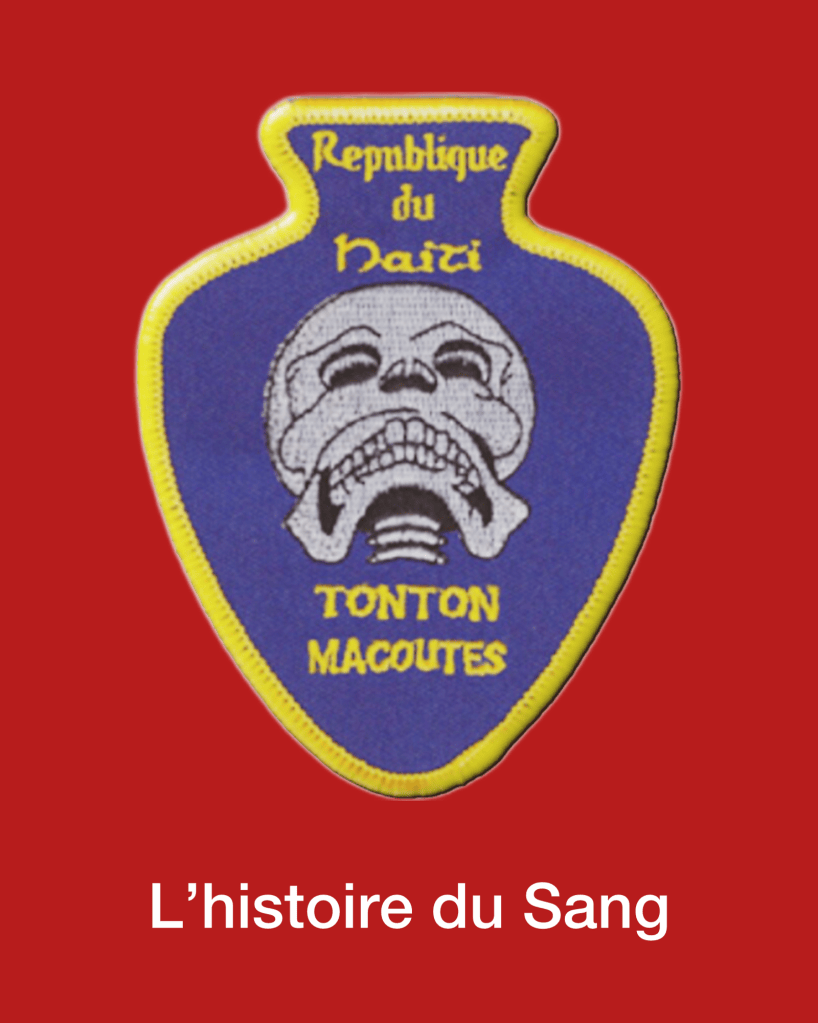
The U.S. State Department reported an estimate: approximately 10,000 Muslims in Haiti in 2022, while noting that insecurity makes religious population figures difficult to establish precisely. Haiti is the third largest country in the Caribbean by area, and with an estimated population of 11.4 million people, 95% of whom are of African descent. Haitian Muslims, both local and foreign immigrants, form less than 1% of the total population.
Islam has a much older history in both Haiti and the United States than their modern Muslim communities might suggest. In both places, Islam arrived partly through the Atlantic slave trade, survived under slavery in fragmented ways, and later developed into organized communities. But the two histories diverged significantly, the difference of the two being the foundation to this version of the story.
Islam was present among some Africans brought to Saint-Domingue, the French colony that would become Haiti. West Africa included substantial Muslim populations, and enslaved Africans from Muslim regions were among those transported to the Americas. Evidence from the wider Caribbean indicates that Muslim Africans participated in slave resistance and preserved elements of Islamic learning and identity despite enslavement.
There is evidence that some Africans in Saint-Domingue possessed Arabic literacy and Islamic knowledge. François Mackandal, the famous eighteenth-century maroon leader, is particularly interesting: historical sources describe him as knowing Arabic, and modern scholarship finds evidence that he had familiarity with Islam, while also emphasizing that his religious world was shaped by multiple African traditions.
Mackandal, active in Saint-Domingue in the mid-18th century, represents the connection between West African Islam and resistance to French slavery in Haiti.
Historical scholarship indicates that Mackandal was probably from the Mende/Senegambian region of West Africa, an area where Islam had a significant presence.
Enslaved at a young age, “François” was a name he was referred to while enslaved. It is speculated that Mackandal lost his right arm in a farming accident when it was caught in a sugarcane press and crushed between the rollers.
When he was sent to work at a remote location, Mackandal was able to escape and live as a maroon beginning around 1748.
A maroon is an enslaved person who escaped plantation slavery and established relationships outside colonial control. Maroons frequently hid in remote environments, in deep bushes and caves, all because colonial authorities tried to eradicate them. They were effectively “freedom fighters”, and frequently used guerrilla warfare tactics to defend their settlements. They would sometimes go as far as allying with enemies attacking a colony. Sometimes, Maroons would also function as trading partners with remote settlers or Natives.
While living as a maroon, Mackandal made and distributed magical protective bags of various ingredients to enslaved people. He held rituals for the maintenance and creation of the charms, which created a large religious community among enslaved people. According to C.L.R. James, Mackandal had the eloquence to a European orator, differing only in strength and vigor.
Mackandal built networks among enslaved Africans and became famous for his knowledge of plants, medicines, poisons, spiritual practices, and African religious traditions. He had a reputation as a poisoner, although scholarship has disputed the idea that Mackandal ever used poison to kill.
In 1758, the French, fearing that enslaved poisoners planned to kill all whites in the colony, tortured an enslaved woman named Assam, who also accused of poisoning, into naming dozens of people as co-conspirators. She claimed there was a large group of enslaved people who were poisoning their enslavers, which confirmed the fears of the French. Not long after Assam’s confession, Mackandal attended a celebration on a plantation, where someone told observing French men that there was a poisoner present. Mackandal was captured and reported to the French government.
Around the time of Mackandal’s capture, there was a widespread panic among colonial enslavers that the enslaved people in Saint-Domingue were poisoning the white population in order to take over Saint-Domingue.
The panic was largely caused by the statements of an enslaved man named Médor, who confessed to ‘poisoning’ the family who enslaved him. At the time, “poison” was a term used by Africans for any powerful substance that was influenced by magic, and was linked to practices of witchcraft.
According to contemporary accounts of the time, during Mackandal’s interrogation he repeated the Arabic-language Shahada, (Muslim testimony of faith) several times and even translated its meaning to his French captors during his interrogation before being condemned to death. The Shahada is the most fundamental pillar of Islam, and is written as follows:
شْهَدُ أَن لَّا إِلَٰهَ إِلَّا ٱللَّٰهُ
أَشْهَدُ أَنَّ مُحَمَّدًا رَسُولُ ٱللَّٰهِ
The translation is simple:
I bear witness that there is no god worthy of worship except Allah.
I bear witness that Muhammad is the Messenger of God.
The transliteration is not complex:
Ash hadu alla ilaha ill-Allah
Ash hadu anna Muhammadan Rasul Allah
The Shahada is also a core component of the Adhan (Muslim call to prayer), which is recited before each of the five obligatory daily prayers. A single honest recitation of the Shahada is all that is required for a person to become a Muslim.
After a case that lasted only a few days, Mackandal was burned at the stake in the center square of Port-au-Prince. He never confessed to poisoning.
His significance as a figure in the history of Haitian independence has been immortalized through Haitian currency.
Not long after Mackandal’s death, doctors would speculate that the deaths were more likely caused by animals ingesting anthrax from the soil, then spreading the poison to humans through consumption, which caused people to fall ill after consuming the dead animals.
After Mackandal was executed, his case was widely publicized as evidence of discontent among enslaved people, which enslavers were already concerned with. As stories were spread in magazines, there were many fantastical features added on to Mackandal’s story. Unverifiable sources claimed that Mackandal sought a genocide of whites in Saint-Domingue, indiscriminately slaughtered people, planned a revolution, and was the leader of a massive maroon band who planned to take over Hispaniola.
According to some popular narratives, Mackandal created poisons from island herbs. He distributed the poison to enslaved people, who added it to the meals and refreshments they served the French plantation owners and planters. He became a charismatic guerrilla leader who united the different maroon bands and created a network of secret organizations connected with enslaved people still on plantations. He led maroons to raid plantations at night, torch property and kill the enslavers.
Mackandal’s public torture and execution (via burning at the stake) is depicted vividly in Guy Endore 1934 novel Babouk. Both Mackandal’s rebel conspiracy and his brutal killing are shown as influential on Babouk (based on Dutty Boukman), who helps to lead a 1791 slave revolt.
Some scholars have proposed that Dutty Boukman had an Islamic background or relationship to Islam, while other scholarship emphasizes his documented association with Vodou.
Haitian Vodou is an African diasporic religion that developed in Haiti between the 16th and 19th centuries. It arose through a process of syncretism between several traditional religions. There is no central authority in control of the religion and much diversity exists among practitioners.
Vodou teaches the existence of a transcendent creator divinity, Bondye, under whom are spirits known as Iwa.
These lwa typically derive their names from traditional West and Central African deities, are equated with Catholic saints, and divide into groups called nanchon (“nations”), most notably the Rada and the Petwo, respectively.
The Rada which are considered “sweet” or “cool”, while the Petwo, the “volatile” or “hot”. This is comparable to, but distinct from the Islamic concepts of Angels and Jinn. Adherents to Vodou seek the aid of the lwa, and spirits of the dead, by offering them fruit, liquor, and sacrificed animals.
Communication with the lwa is sought through divination and through a key ritual in which Vodouists drum, sing, and dance to encourage a lwa to temporarily possess the dancers.
Healing rituals and the preparation of herbal remedies and talismans also play a prominent role.
Vodouists will often be initiated into an ounfò (temple), run by an oungan (priest) or manbo (priestess), through which group ceremonies are conducted. Alternatively, Vodou is also practised within family groups or in secret societies like the Bizango.
Most Haitians practice both Vodou and another religion, and typically see no contradiction in pursuing the two systems simultaneously. Many Vodouists were involved in the Haitian Revolution of 1791 to 1801 which overthrew the French colonial government, abolished slavery, and transformed Saint-Domingue into the Haitian republic. Having faced much criticism through its history, Vodou has been described as one of the world’s most misunderstood religions.
Dutty Boukman was born in the region of Senegambia (present-day Senegal and Gambia), around the year 1767. He capture was captured and forced into slavery while living in Senegambia, first to the island of Jamaica, then Saint-Domingue, modern-day Haiti. Prior to his capture he was a Muslim Cleric, also known as a Sheikh.
His French name came from his English nickname, “Book Man“, which scholars have interpreted as having Islamic origins; they note that the term “People of the Book” is a synonym for a Muslim (or Jewish or Christian) in many parts of the world. The name Dutty likely refers to the plantation where Boukman was enslaved, Dutih. He was known to some of his followers as “Zamba” Boukman.
In Haiti, the word Zamba refers to a traditional ritual singer, poet, or master drummer, particularly within the context of Haitian Vodou. A Zamba is viewed as a keeper of oral history, a storyteller, and a cultural preservationist. They lead call-and-response singing during community gatherings or farming cooperatives. The direct equivalent to the Zamba is the Imam.
After he attempted to teach other enslaved people how to read, he was sold to a French plantation owner and placed as a commandeur (slave driver) and, later, a coach driver. During his time as a coach driver, Boukman was able to travel between plantations and estates. This allowed him to facilitate communication, learn political news, and encourage resistance factions among enslaved peoples. While working as a coach driver, Boukman met Jean-Jacques Dessalines, another enslaved person who helped inspire and lead resistance.
Boukman and Dessalines were enslaved on plantations less than a mile apart and due to their assignments and skills had more privileges allowing greater movement than other enslaved workers. This allowed them to form strong bonds with one another which would ultimately help with their planned revolt.
August 24, 1791
Before the Bois Caïman ceremony, Vodou rituals were seen as an event of social gathering where enslaved Africans had the ability to organize. These meetings and opportunities to organize were considered harmless by white slave owners; therefore, they were permitted. It is also argued that Vodou created a more homogeneous black culture in Haiti.
On the night of August 24, 1791, representative slaves from nearby plantations gathered to participate in a secret ceremony conducted in the woods by nearby Le Cap in the French colony of Saint-Domingue. Bois Caïman translates to Alligator Woods.
(Note: different accounts report the ceremony as taking place as early as August 14 to as late as August 24, with the latter date being the one chosen for the official History of Haiti and the Haitian Revolution, and the beginning of a History of Blood)
The ceremony served as both a religious ritual and strategic meeting as enslaved Africans met and planned a revolt against their ruling white enslavers. A witness described the presence of 200 enslaved Africans at the event. The ceremony is considered the official beginning of the Haitian Revolution.
In the following days, the whole Northern Plain was in flames, as the revolutionaries fought against the whites who had enslaved them. To reduce the social disorder of the rebellion, the French captured Boukman and beheaded him. The French then displayed his head on Cap’s square to prove his mortality and French power.
Clouded in mystery, many accounts of the catalytic ceremony and its particular details have varied. There are no known first-hand written accounts about what took place that night. It was first documented in the white colonist Antoine Dalmas’s “History of the Saint-Domingue Revolution”, published in 1814.
A Haitian writer, Herard Dumelse visited the region and took oral testimonies in order to write his account of the ceremony. He recorded what is thought to be the earliest version of the Bois Caïman speech made by Boukman. Translated, it reads:
…This God who made the sun, who brings us light from above, who raises the sea, and who makes the storm rumble. That God is there, do you understand? Hiding in a cloud, He watches us, he sees all that the whites do! The God of the whites pushes them to crime, but he wants us to do good deeds. But the God who is so good orders us to vengeance. He will direct our hands, and give us help. Throw away the image of the God of the whites who thirsts for our tears. Listen to the liberty that speaks in all our hearts.
Cécile Fatiman was a Haitian Vodou priestess and revolutionary. Born to an enslaved African woman and a Corisan prince, she lived her early life in slavery, before being drawn to Enlightenment Ideals of “Liberté, égalité, fraternité”, and Haitian Vodou, which shaped her desire to end the institution of slavery in Haiti.
She later married a fellow revolutionary leader, Jean-Louis Pierrot, the man who would go on to become the 5th President of Haiti, and with whom she would have a daughter. She was reported to have lived a long life, dying at the age of 112.
Haitian historian Rodney Salnave believed her father to have been a son of King Theodore of Corsica and that Fatiman’s birth name was Cécil Attiman.
Other hypotheses on her origins have been provided by various historians: Aisha Khan believed her to have been a Muslim and that her surname “Fatiman” was cognate with the given name Fatima; and Aimé Césaire believed her to be Kongolese, although David Patrick Geggus questions how in this version she would have had the name “Fatiman”.
Al-Fatiha is the first surah (chapter) of the Quran, consisting of seven verses that serve as an essential prayer for divine guidance and mercy.
Al-Fatiha translates to “The Opening”
Reciting Surah Al-Fatiha is a core pillar of every unit (rakah) of Islamic prayer (Salah). Without it, the validity of the prayer is heavily compromised according to the majority of scholars, based on the prophetic tradition: “There is no prayer for the one who does not recite the Opening of the Book.”
Within the dense forests of Northern Haiti and in the middle of a thunderstorm, Boukman and Fatiman brought together 200 enslaved people from a number of nearby plantations and called on them to revolt against slavery.
Fatiman then sacrificed a black pig, in an invocation of the Iwa.
Garvey F. Lundy understood this to be a Petwo rite of Vodou, which was later used by Haitians that resisted the United States Occupation in 1915, and the Duvalier Dynasty that began in 1957, two events that forever changed the history of Haiti.
Despite purported facts and embellishments that have dramatized the ceremony over the centuries, the most reoccurring anecdote is the sacrifice of a black Creole pig by the mambo Cécile Fatiman and the pact formed through its blood. The very first written account of the sacrifice stated the following:
A black pig, surrounded by the slaves believe to have magical powers, each carrying the most bizarre offering, was offered as a sacrifice to the all-powerful spirit…The religious community in which the nègres slit its throat, the greed with which they have believed to have marked themselves on the forehead with its blood, the importance that they attached to owning some of its bristles which they believed would make them invincible.
The above statement is the basis for the official version of events documented in the official History of Haiti and the Haitian Revolution, an excerpt of which states:
A man named Boukman, another oungan, organized on August 24, 1791, a meeting with the slaves in the mountains of the North. This meeting took the form of a Voodoo ceremony in the Bois Caïman in the northern mountains of the island. It was raining and the sky was raging with clouds; the slaves then started confessing their resentment of their condition. A woman started dancing languorously in the crowd, taken by the spirits of the loas. With a knife in her hand, she cut the throat of a pig and distributed the blood to all the participants of the meeting who swore to kill all the whites on the island.
On January 1, 1804, the Haitian Declaration of Independence signaled the culmination of the only successful Slave Revolution in history.
The declaration itself is a three-part document. The longest section, “Le Général en Chef Au Peuple d’Hayti“, which is known as the “proclamation,” functions as a prologue. It has one signatory, Jean-Jacques Dessalines, the senior general and a former slave. Due to Dessalines being illiterate and unable to speak French, his secretary Louis Boisrond-Tonnerre then read out the proclamation, followed by the act of independence, which were both written by the latter. This declaration was later followed by an independence day speech from Dessalines—recited in Haitian Creole—in which he denounced France.
In particular, the declaration demands vengeance against the French White Creoles, who committed atrocities against the African-Haitian population. Dessalines claimed that:
It is not enough to have expelled the barbarians who have bloodied our land for two centuries; … We must, with one last act of national authority, forever assure the empire of liberty in the country of our birth; we must take any hope of re-enslaving us away from the inhuman government …. In the end we must live independent or die.
Boisrond-Tonnerre stated, “For our declaration of independence, we should have the skin of a white man for parchment, his skull for an inkwell, his blood for ink, and a bayonet for a pen!”.
Incidentally, it is claimed that Boisrond-Tonnerre was chosen to author the declaration by Dessalines due to this statement itself.
These words presaged the 1804 Massacre, which was supervised by Dessalines.
The massacre—which took place in the entire territory of Haiti—was carried out from early February 1804 until April 22, 1804.
During February and March, Dessalines travelled among the cities of Haiti to assure himself that his orders were carried out. This ensured that the social and political power then rested with the blacks and those of mixed-descent, thereby completely changing the status quo post-independence. As such, emancipation gave Dessalines an avenue to exercise revenge on the former slave-owners, who were systematically persecuted.
The historical evidence supports Islam as one strand within the African religious landscape of revolutionary Saint-Domingue, rather than Islam being the single religious foundation of the revolution.
Many African Muslims had been forcibly converted to Christianity, while others lost institutional connections to Islamic communities.
Islamic traditions survived unevenly, sometimes through family practices, cultural memory, and isolated individuals rather than through large mosque networks.
Today, Islam remains a minority faith in Haiti, which is predominantly Christian (Catholic and Protestant) alongside widespread cultural or active practice of Vodou.
The Haitian government historically has not granted official legal recognition to Islam or traditional Vodou marriages in the same manner as mainstream Christian denominations, though Vodou has gained broader official acknowledgment over the years.
Muslims in Haiti sometimes face social misunderstandings or stigma in a society deeply anchored in traditional Christianity and Vodou.


Leave a comment