My history is that of three canon events, at different points in history, where at each point, 3,000 people died.
Mount Sinai, Israel, 1313 BC – The Golden Calf
Jacmel, Haiti, 1804 – The Haitian Revolution
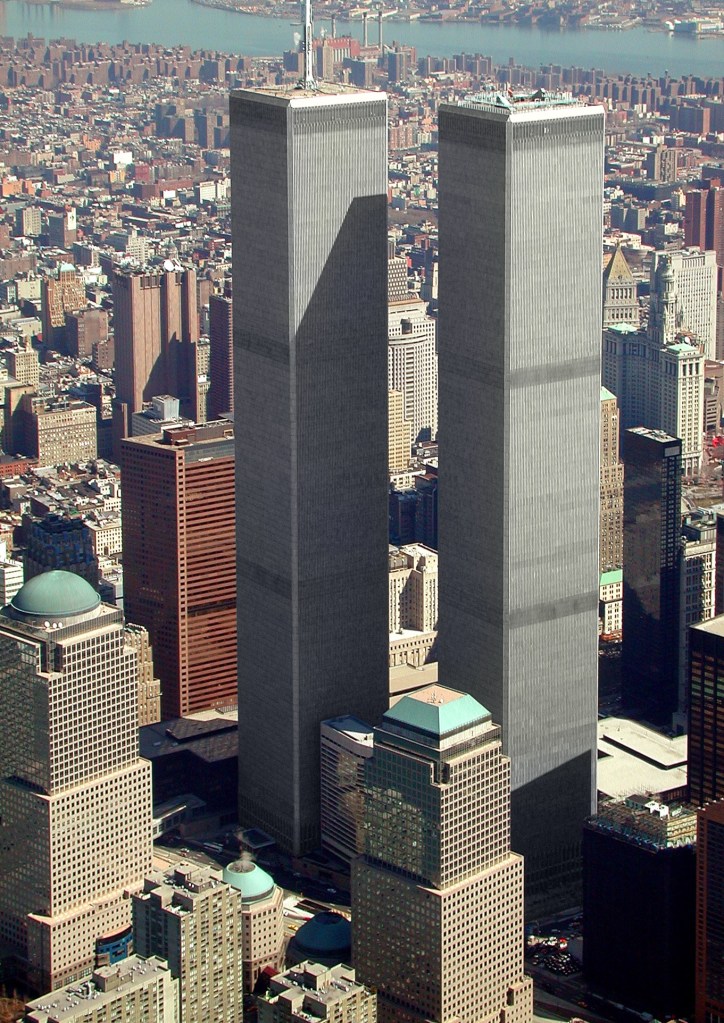
Manhattan, New York, 2001 – 9/11
The first, is an event we should all know, an event that occurred in Biblical times, when Moses first received the Tablets of the Law. This occurred shortly after the exodus, and the establishment of the Passover, and the plagues.
The second, is an event that occurred in the birthplace of my grand-père, Yves Pean, in a story of the first successful slave revolt, and an event that brings us closer to the modern era.
The last, is an event that occurred both in my hometown, and in my lifetime, near where my grand-père lived, in the city where I lived with my mother, prior to our separation.
What was the first plague? he lifted up the rod and struck the water… and all the water in the Nile was turned into blood (Exodus 7:20)
What was the price of admission? On average, the adult human body contains around 10.5 pints of blood. Put another way, that’s about five liters. (https://ourbloodinstitute.org/)
about one pint of blood is taken when donating blood (about 10% of your overall blood)
pregnant women have a blood volume increase of roughly 50%
a newborn baby only has about a cup of blood
What writes better than ink? Louis Boisrond-Tonnerre, secretary to Jean-Jacques Dessalines, the Father of Haiti, complained that the declaration of independence was not aggressive enough, saying:
“For our declaration of independence, we should have the skin of a white man for parchment, his skull for an inkwell, his blood for ink, and a bayonet for a pen!”. Dessalines later himself specifically pledged to “kill every Frenchman who soils the land of freedom with his sacrilegious presence.”
Boisrond-Tonnerre was born Louis Boisrond in Torbeck in southwest Haiti. He acquired the name “Tonnerre” (French for “thunder”) as an infant, when his cradle was hit by lightning. His father, a carpenter named Mathurin Boisrond, amazed that his infant son was unharmed, gave him the name “Tonnerre”.
Boisrond-Tonnerre studied in France before returning to Haiti, where he took part in the Haitian Revolution.
In 1791, a man of Jamaican origin named Dutty Boukman became the leader of the enslaved Africans held on a large plantation in Cap-Français.[14]
In the wake of the French Revolution, he planned to massacre all the French living in Cap-Français. On 22 August 1791, the enslaved Africans descended on Le Cap, where they destroyed the plantations and executed all the French who lived in the region. King Louis XVI was accused of indifference to the massacre, while the slaves seemed to think the king was on their side.[15] In July 1793, the French in Les Cayes were massacred.[16]
Despite the French proclamation of emancipation, the blacks sided with the Spanish who came to occupy the region.[17] In July 1794, Spanish forces stood by while the black troops of Jean-François massacred the French whites in Fort-Dauphin.[17]
Dessalines came to power after France’s defeat and subsequent evacuation from what was previously known as Saint-Domingue. In November 1803, three days after Rochambeau‘s forces surrendered, Dessalines ordered the execution of 800 French soldiers who had been left behind due to illness during the evacuation.[18][19] He did guarantee the safety of the remaining white civilian population.[20][page needed][21] However, Jeremy Popkin writes that statements by Dessalines such as “There are still French on the island, and still you considered yourselves free,” spoke of a hostile attitude toward the remaining white minority.[18]
On 1 January 1804, Dessalines proclaimed Haiti an independent nation as the first modern independent Black republic.
Haitian Declaration of Independence
Generals and you, leaders, collected here close to me for the good of our land, the day has come, the day which must make our glory, our independence, eternal.
If there could exist among us a lukewarm heart, let him distance himself and tremble to take the oath which must unite us. Let us vow to ourselves, to posterity, to the entire universe, to forever renounce France, and to die rather than live under its domination; to fight until our last breath for the independence of our country.
And you, a people so long without good fortune, witness to the oath we take, remember that I counted on your constancy and courage when I threw myself into the career of liberty to fight the despotism and tyranny you had struggled against for 14 years. Remember that I sacrificed everything to rally to your defense; family, children, fortune, and now I am rich only with your liberty; my name has become a horror to all those who want slavery. Despots and tyrants curse the day that I was born. If ever you refused or grumbled while receiving those laws that the spirit guarding your fate dictates to me for your own good, you would deserve the fate of an ungrateful people. But I reject that awful idea; you will sustain the liberty that you cherish and support the leader who commands you. Therefore vow before me to live free and independent, and to prefer death to anything that will try to place you back in chains. Swear, finally, to pursue forever the traitors and enemies of your independence.
LIBERTY OR DEATH PROCLAMATION (by Jean Jacques Dessalines)
“Yes, we have rendered to these true cannibals war for war, crime for crime, courage for courage [should be “outrage for outrage”]; Yes, I have saved my country – I have avenged America. The avowal I make of it in the face of earth and heaven, constitutes my pride and my glory. – Of what consequence to me is the opinion which contemporary and future generations will pronounce upon my conduct? I have performed my duty; I enjoy my own approbation; for me that is sufficient. But what do I say? The preservation of my unfortunate brothers, the testimony of my own conscience are not my only recompence [sic]: I have seen two classes of men, born to cherish, assist and succour one another – mixed, in a word, and blended together – crying for vengeance, and disputing the honor of the first blow.
From February 1804[42] until 22 April 1804, between 3,000 and 7,000 people were killed.
In mid-February, Dessalines told some cities (Léogâne, Jacmel, Les Cayes) to prepare for mass massacres. He referred to the massacre as an act of national authority. It was also regarded as a necessary act of vengeance. Rumors about the white population suggested that they would try to leave the country to convince foreign powers to invade and reintroduce slavery. Discussions between Dessalines and his advisers openly suggested that the white population should be put to death for the sake of national security. Whites trying to leave Haiti were prevented from doing so.
In Port-au-Prince, only a few killings had occurred in the city despite the orders. After Dessalines arrived on 18 March, the number of killings escalated. According to a merchant captain, about 800 people were killed in the city, while about 50 survived.
On 18 April 1804, Dessalines arrived at Cap-Haïtien. Only a handful of killings had taken place there before his arrival, but the killings escalated to a massacre on the streets and outside the city after his arrival
The course of the massacre showed an almost identical pattern in every city he visited. Before his arrival, there were only a few killings, despite his orders. When Dessalines arrived, he first spoke about the atrocities committed by former white authorities, such as Rochambeau and Leclerc, after which he demanded that his orders about mass killings of the area’s white population should be put into effect. Reportedly, he ordered the unwilling to take part in the killings, especially men of mixed race, so that the blame should not be placed solely on the black population. Mass killings took place on the streets and on places outside the cities.
The people chosen to be killed were targeted primarily based on three criteria: “skin color, citizenship and vocation.” While some whites, such as Poles and Germans who were granted citizenship and “a few non-French veterans and American merchants, along with some useful professionals such as priests and doctors” were spared, political affiliation was not considered. The white victims were almost entirely French, commensurate with their share in the white population of Haiti. About his targets of the massacre, Dessalines’ slogan exemplified his mission to eradicate the white population with the saying “Break the eggs, take out the [sic] yolk [a pun on the word ‘yellow’ which means both yolk and mulatto] and eat the white.”[40] Upper class whites were not the only target; any white of any socioeconomic status was also to be killed, including the urban poor known as petits blancs.
Before his departure from a city, Dessalines would proclaim an amnesty for all the whites who had survived in hiding during the massacre. When these people left their hiding place however, most (French) were killed as well.[46] Many[quantify][quantify] whites were, however, hidden and smuggled out to sea by foreigners.[46] However, there were notable exceptions to the ordered killings. In parallel to the killings, plundering and rape also occurred. As elsewhere, the majority of the women were initially not killed, and the soldiers were reportedly somewhat hesitant to do so. Dessalines’s advisers, however, pointed out that the white Haitians would not disappear if the women were left to give birth to white men, and after this, Dessalines ordered that the women should be killed as well, with the exception of those who agreed to marry non-white men.
The Haitian massacres “lack the moral clarity typically associated with genocide,” he says, because the French colonists had abused Black Haitians and would have carried out their own genocide had they won the conflict.
It was a form of revenge exacted by an oppressed group against those who dominated it, much like the Rwandan and Cambodian genocides.
The weapons used (during the Massacre) should be silent weapons such as knives and bayonets rather than gunfire, so that the killing could be done more quietly, and avoid warning intended victims by the sound of gunfire and thereby giving them the opportunity to escape.
One of the most notorious of the massacre participants was Jean Zombi, a mulatto resident of Port-au-Prince who was known for his brutality. One account describes how Zombi stopped a white man on the street, stripped him naked, and took him to the stair of the Presidential Palace, where he killed him with a dagger. Dessalines was reportedly among the spectators; he was said to be “horrified” by the episode
In the 1805 constitution, all citizens were defined as “black”. The constitution also banned white men from owning land, except for people already born or born in the future to white women who were naturalized as Haitian citizens and the Germans and Poles who got Haitian citizenship.
Boisrond-Tonnerre became a victim of post-revolutionary infighting and was executed in October 1806. According to the Haitian author Christophe Phillippe Charles, Boisrond-Tonnerre scribbled the following quatrain on the walls of his cell before his execution on either the night of 23 or 24 October 1806:
Humide et froid séjour fait par et pour le crime
Où le crime en riant immole sa victime
Que peuvent inspirer tes fers et tes barreaux
Quand un cœur pur y goûte un innocent repos? (Christophe 35).
Translation :
Cold and humid internment crime has both fashioned and formed Where crime, laughing, immolates and consumes its servant But what [fear] can your iron bars hope to inspire When a pure heart wrests from them a peaceful rest? (Christophe 35)
Dessalines had been assassinated seven or eight days prior on 17 October in Port-au-Prince.
3,000 years ago
He said to them, “Thus says the LORD, God of Israel, ‘Every man fasten his sword on his side, and go back and forth from gate to gate throughout the camp, and let every man kill his brother, and every man his friend, and every man his neighbor.’”
The Levites did according to the word of Moses, and about three thousand men of the people died that day.
For Moses had said “Consecrate yourself today to the LORD, that He may bestow a blessing on you this day, for every man opposes his son and his brother.”


 🩸
🩸 