A History of Blood – Vol. 2, Chapter 14
I saw somewhere that it’s important to share the mistakes we made over the course of our careers, and since there’s a lot on my mind, I thought it would be a perfect way to end this volume of my story.

The biggest mistake I’ve made is not centering my social media narrative around my insurance business. Things like my military career, my career in management consulting, religious opinions, political opinions, my family, and my dating life all have a place offline, but have no place on the internet or around my internet persona.
With that in mind, the rest of this article will go into detail about the biggest mistakes I’ve made in the Insurance Business, and how that has lead to immediate changes in my behavior.
The most Important lesson I’ve learned
The most important lesson I’ve learned is that success in the insurance business is centered around your initial, resident, and non-resident licenses, broken down into three steps:
- Being licensed in your resident state and the state you are writing business
- Understanding what carriers and what products are available in said state
- Having a network of prospects, clients, and agents in any state you are writing business, while avoiding conversations with people who are outside of the areas you are licensed in.
Basically, anytime you meet a new person, your first order of business is figuring out where they are from, and making sure you are licensed in that area, or otherwise creating a strategy to enter that market over time.
Historically, I’ve struggled to maintain a business presence in multiple states despite frequently traveling. As of the time of writing this, I’ve lived in NY, MD, PA, TX, and CA all for more than a year, while also living in SC, NC, OH, and FL all for over a month, with the latter being my most recent state of residence. I’m in the process of transferring my resident license to FL as of the time of writing this, after that, I plan on getting non resident licenses in the following states:
NY, MD, PA, TX, CA, OH, MI, OK, AR, VA, NC, SC, WV, VA, KY, GA, LA, AL, MO, UT, and TN
That includes all the states I’ve lived in and all the states I’ve seen worked in over the course of my career, let alone my personal life. I will add more states to the above list until I’ve successfully wrote business in all 50 (which is a new goal of mine) but the above are the highest priority due to a combination of technical value and sentimental value.

The second most important lesson
After licensing, the biggest lesson is recruiting.
At first, I was confused as to how to go about recruiting, but eventually I learned that recruiting is a specific type of prospecting, kind of like how a first person shooter is a specific type of video game.
The secret, is that EVERYONE is a prospect, but only some people are recruited.
70% of our sales must come from people outside of the organization, meaning that the ratio of client prospects to agent prospects should be no less than 3 to 1.
For every 3 people that fit the ideal client profile, you have space for 1 person that fits the ideal recruit profile. What that does is allow the prospective agent to purchase their own products without violating any legal or ethical principles.
When recruiting, it’s also important to do so with the understanding of how the organization is structured. The overall goal is the rank of Vice President.

The rank of Vice President (VP) requires the following:
- 6 Marketing Directors
- 180 Licensed and Appointed Agents
- 300 Base Shop Recruits
- 300 Base Shop Sales
- $600,000 in Annual Premium
The Rank of Marketing Director (MD) requires the following:
- 3 Field Associates OR 1 Director and 1 Field Associate
- 15 Licensed and Appointed Agents
- 50 Base Recruits
- 50 Sales
- $100,000 in Annual Premium
The Rank of Director requires the following:
- 2 Field Associates OR 1 Field Associate and 2 Associates
- 6 Licensed and Appointed Agents
- 30 Base Recruits
- 30 Sales
- $60,000 in Annual Premium
The Rank of Field Associate (FA) requires the following:
- Agent must be Licensed
- 1 Associate
- 15 Base Recruits
- 15 Sales
- $30,000 in Annual Premium
The Rank of Associate requires the following:
- 3 Direct Trainees
- 3 Sales
- $3,000 in Annual Premium
In order to become a Trainee, an agent must simply execute a New Associate Agreement. It’s worth noting that while you don’t need to be licensed in order to reach the rank of Associate, you do need to be licensed in order to market insurance products or otherwise earn any commission, bringing us back to the first lesson of this article.
It’s also worth noting that the contract levels, or commission per policy sold, increases with each rank, starting at 30% at Trainee, and increasing to 79% for Vice President.
What that means is that for every $1,000 of Annual Premium sold, the Trainee will receive $300, while the Vice President would receive $790 for the same sales volume.
Beginning at the rank of Marketing Director, the agent also begins to receive an override.
What that means is that they will receive a commission certain sales within their organization. The percentage of the override is the difference between the contract levels of the senior agent and the contract levels of the junior agent, up to 25%.
What that means, is depending upon what agent specifically writes the business, the VP for example, would receive a 4% commission on a sale from an MD in their organization, 19% from a sales from a Director, and 25% on a sale from any of lower ranks inside of his organization, assuming they were directly recruited by the VP.
That’s anywhere from an extra $40 to an extra $250 per every $1,000 sold without the VP actually having to sell it themselves.
There are a lot of people who don’t like the PHP Compensation Plan. They complain that the starting contract level is too low or that recruiting is required to reach the higher contract levels, without understanding the Big Picture.
John D. Rockefeller, one of the wealthiest Americans of all time, famously said, “I would rather earn 1% off a 100 people’s efforts than 100% of my own efforts”.
By building a team (in this case, called Savages) where others contribute, my income will no longer be limited by my own time or my own physical energy. I can shift my focus to building an organization, highlighted by personal production in short bursts (for example, writing a lot of sales while on a business trip or during a specific time of the year, before spending the rest of the year focused on different recruiting campaigns, potentially with a similar approach.
The Final Lesson
The final lesson ties everything together.
The final lesson is Business Administration: Calendars, Spreadsheets, and Group Chats
Every day I’m “working” whether I’m working in the office or in the field, I’ve realized I need to use either physical or digital calendars and spreadsheets.
A monthly calendar helps keep track of Birthday’s, Holidays, and other Big Events, while a daily calendar helps me keep track of activity and appointments.
I’ve seen a lot of people leverage a third-party or a business partner to handle scheduling for them, so the odds are is that I will begin doing the same thing.
The Spreadsheets are usually organized by month however, and are separated into the following categories:
- New Prospects
- Guests (recently attended an interview or event)
- Associates (licensed and unlicensed)
- Open Cases
- Sales (pending commission
The tricky part of the workflow is that it’s a balancing act; the 3 to 1 ratio of clients to associates means that there’s always a split between Prospecting, Policy Reviews, and Group Interviews. The beautiful part about prospecting is that you can prospect both at the same time, but the important part is the approach. You will always have more client prospects than agent prospects, but if the ratio skews too far in one direction, then you have to adjust your advertising accordingly.
When you have an abundance of client prospects, you advertise the lifestyle or opportunity.
When you have an abundance of agent prospects, you advertise the industry or products.

The lack of monetary success in my life is directly tied to shortcomings in licensing, recruiting, and administration.
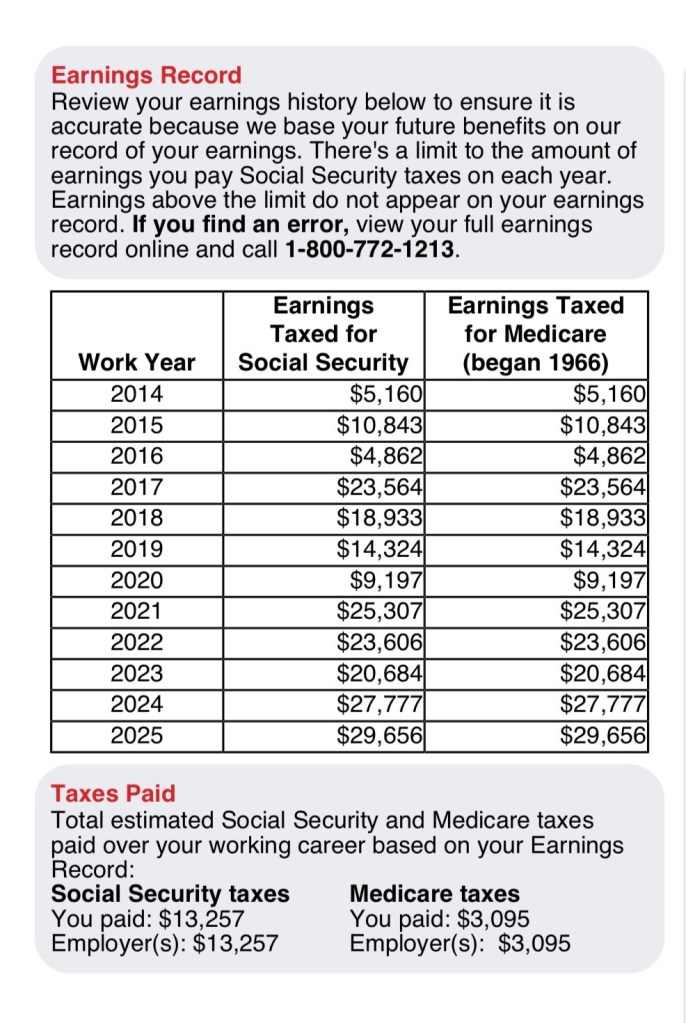
I did not earn my initial insurance license until 2025, which was one of the better years financially I’ve had. I’ve made more money in previous years, but I would always run into a tax issue mostly which was really just an administrative issue.
I didn’t keep track of my activity nor my expenses, which always lead to high expenses and low income. I’ve realized that the secret is hyper activity, beginning with prospecting, then calling those prospects for appointments, while also including travel either to the place I meet the prospects or the place I make the calls, while also making sure the other administrative elements are sound. To keep expenses low, each expense should have an extremely specific business purpose, ideally related to prospecting, calling, or the actual appointment, with there always been a “paper trail” of what happened. A spreadsheet or journal entry, a call log, a bus ticket, a cab or dinner receipt, etc.
My Birthday is coming up in a few days, and it will be my first birthday since moving to Tampa.
This is certainly a “Big Event”.
Anyway, with the next chapter and volume of this story, I’ll be moving away from the “personal reflection” style of writing, and move towards a “business report” style of writing. I’ll be focusing more on different case studies and stories from within the insurance business specifically, rather than musings on my personal life.


 🩸
🩸 
Leave a comment